

Struggling with eczema on my face and finding it hard to feel comfortable in your own skin? You’re far from alone. In 2025, facial eczema is more common than ever, affecting people of every age and background across New Zealand.
This guide is here to help. We’ll explore what eczema on my face really means, why it happens, and the impact it can have on daily life and confidence. You’ll find the latest advice on triggers, medical and natural treatments—including the power of New Zealand Mānuka extracts—and practical routines for calmer, healthier skin. Ready to take control? Let’s begin.
Understanding Eczema on the Face in 2025
Do you ever look in the mirror and wonder why eczema on my face just won’t settle down? If so, you’re not alone. In 2025, facial eczema is more common than ever, affecting people from all walks of life.
This skin condition isn’t just about discomfort or redness. It can touch your confidence, social life, and even your daily routines. Let's unpack what makes eczema on my face unique, who it affects, and why it’s on the rise.
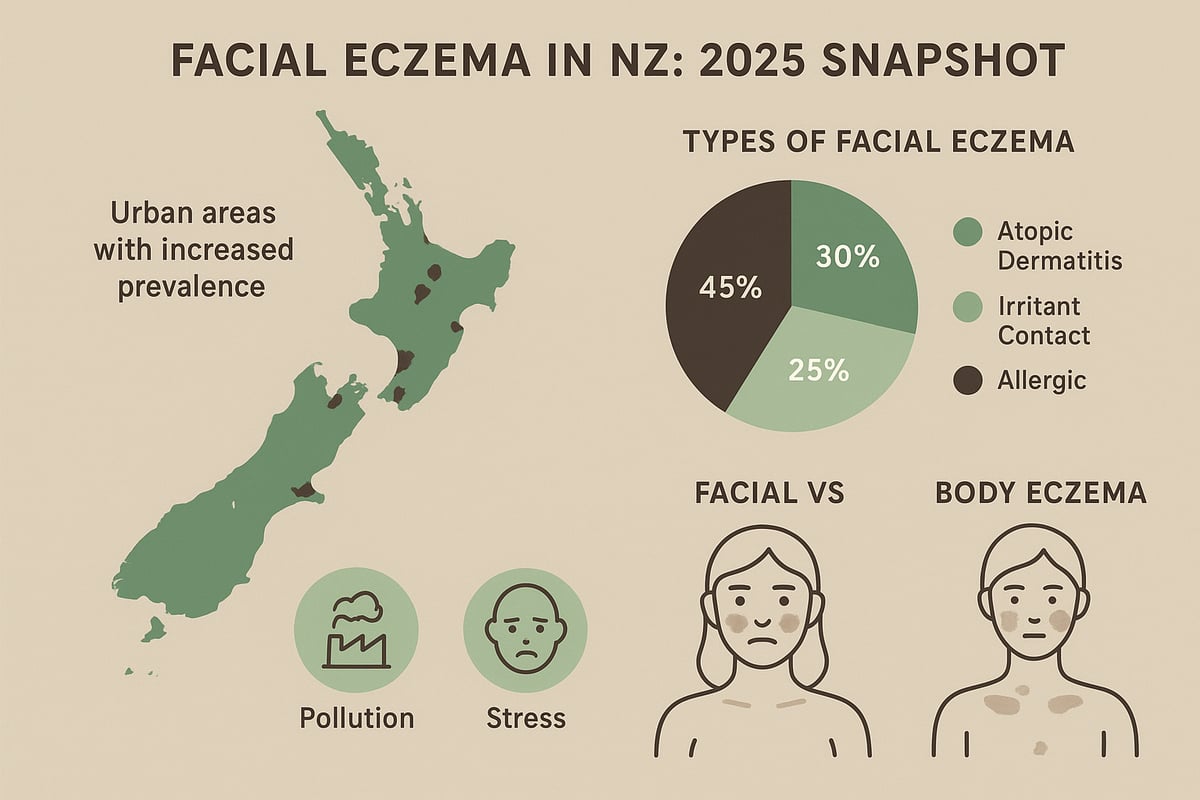
What is Facial Eczema?
Eczema is a chronic, inflammatory skin condition that can flare up at any age. When it appears on your face, it tends to target sensitive spots like your cheeks, forehead, and chin. The skin here is thinner and more exposed, making eczema on my face particularly challenging.
Facial eczema now affects over 10% of the population, with numbers rising each year. According to eczema prevalence statistics, more people than ever are seeking help. The impact goes beyond skin deep. Many experience lowered self-esteem, avoid social events, or feel frustrated when flare-ups are visible.
Unlike eczema on arms or legs, eczema on my face can be harder to hide and often recurs in cycles. It’s a long-term condition, but understanding it is the first step towards relief.
Types of Facial Eczema
There’s no one-size-fits-all when it comes to eczema on my face. Several types can appear, sometimes overlapping and making diagnosis tricky. Here’s a quick comparison:
| Type | Main Features | Common Areas |
|---|---|---|
| Atopic Dermatitis | Linked to allergies, genetic; itchy, red patches | Cheeks, eyelids |
| Contact Dermatitis | Reaction to irritants or allergens | Any facial area |
| Seborrheic Dermatitis | Oily, flaky, often near eyebrows or nose | Brows, nose, scalp |
| Nummular Eczema | Coin-shaped, less common on face | Cheeks, chin |
| Neurodermatitis | Itch-scratch cycle, thickened skin | Jawline, neck |
For example, you might have atopic dermatitis and develop contact dermatitis after trying a new face cream. Or seborrheic dermatitis could be mistaken for simple dandruff if it appears near your eyebrows.
Identifying the exact type of eczema on my face is crucial. The right diagnosis means more effective, targeted treatment and better long-term results.
Who Gets Facial Eczema and Why?
Anyone can develop eczema on my face, but some factors increase your risk. Genetics play a big role, especially if you or your family have a history of eczema, asthma, or allergies.
Facial eczema doesn’t discriminate by age. Infants, teens, and adults all report symptoms. In fact, women are slightly more likely to experience flare-ups, possibly due to hormonal changes or skincare routines.
Environmental factors unique to 2025 are also at play. Urban pollution in New Zealand’s cities, increased screen time, and ongoing mask-wearing have all contributed to higher rates. Living in high-stress environments or spending lots of time indoors can also trigger symptoms.
Some risk factors include:
- Sensitive, dry, or reactive skin
- Family history of atopy
- Occupations with frequent face contact (like healthcare or beauty)
For instance, a university student might notice eczema on my face worsening during exam season, linking stress and environmental triggers. The underlying problem usually involves a weakened skin barrier and an overactive immune response, leaving facial skin vulnerable.
Understanding these risk factors helps you take proactive steps, from gentle skincare to lifestyle adjustments, to keep eczema on my face in check.
Causes, Triggers, and Risk Factors
Understanding why eczema on my face develops is the first step to managing it well. In 2025, new scientific insights and changing lifestyles are shining a light on what’s really going on beneath the skin’s surface. Let’s break down the causes, explore today’s most common triggers, and highlight who is most at risk—plus what you can do to stay ahead.
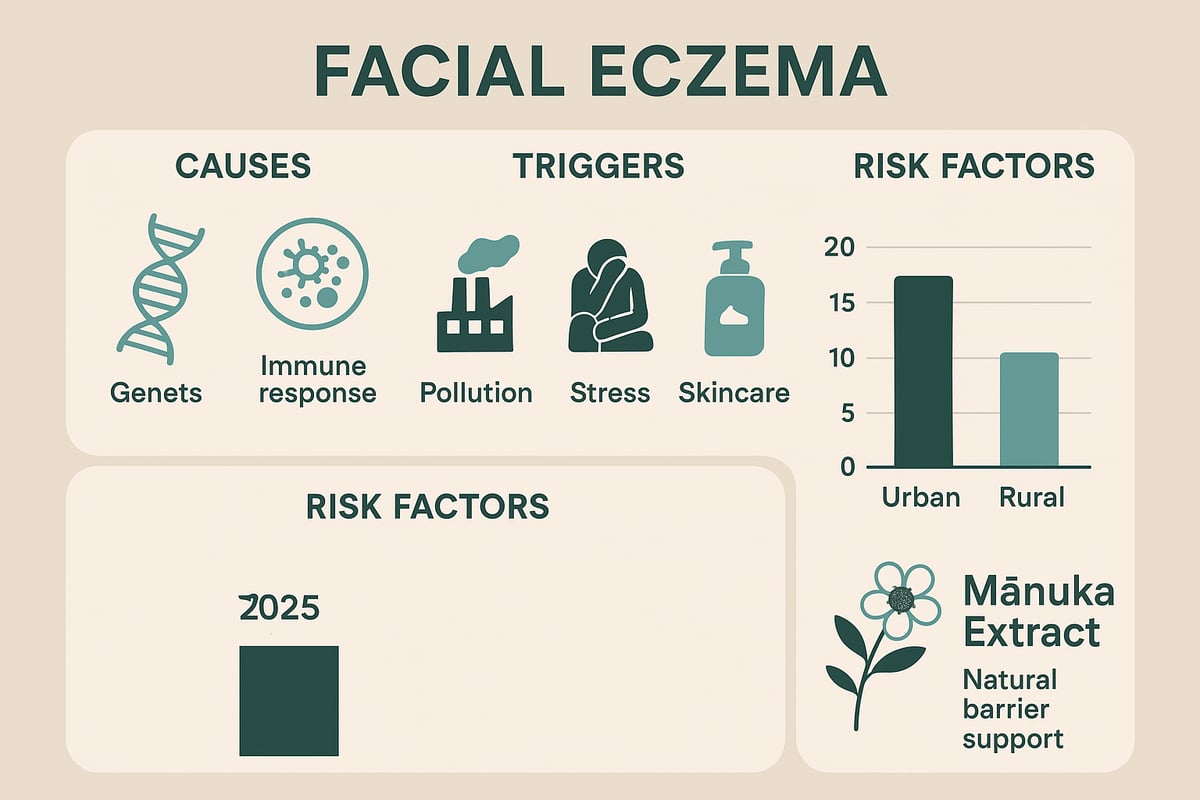
Root Causes of Eczema on the Face
Eczema on my face often begins with genetics. If you have a family history of eczema, asthma, or allergies, your skin barrier may lack key proteins like filaggrin, letting irritants sneak in and moisture escape. An over-reactive immune system then kicks in, attacking your own skin cells and creating inflammation.
Environmental factors are rising in importance, especially in urban New Zealand cities. Increased pollution, more UV exposure, and the effects of climate change in 2025 all play a role. Hormonal changes—think puberty, pregnancy, or stress—can also make eczema on my face worse. For example, recent studies show that city dwellers in New Zealand are reporting more facial eczema linked to air quality dips and temperature swings.
This mix of genetics, immune response, and the modern environment means that facial eczema is rarely caused by just one thing. It’s a complex puzzle, but understanding these root factors can help you take back control.
Common Triggers in 2025
Everyday life is packed with potential triggers for eczema on my face. Irritants such as fragranced skincare, harsh cleansers, and synthetic fabrics can set off a flare. Allergens—like pollen, dust mites, pet dander, and even some foods—are regular culprits.
The climate in 2025 brings new challenges too. Low humidity, cold winds, and sudden weather changes are tough on sensitive facial skin. Lifestyle habits, including prolonged mask-wearing, frequent hand-to-face contact, and high stress all contribute. In fact, over 60 percent of eczema sufferers now cite stress as a major trigger.
Trying a new makeup brand or spending a day outdoors can quickly lead to red, itchy patches. For those struggling with eyebrow eczema, check out this Eczema in eyebrows guide for targeted solutions. Identifying your personal triggers is key to calming eczema on my face long-term.
Risk Factors and Prevention Insights
Some people are simply more prone to eczema on my face than others. A family or personal history of eczema, allergies, or asthma raises your risk. Sensitive, dry, or reactive skin types are especially vulnerable, as are those working in healthcare, cleaning, or beauty industries.
City living, with its high pollution and chronic stress, is a recognised risk factor. Office workers in New Zealand have reported more facial eczema, blaming indoor air quality and artificial heating or cooling.
Prevention starts with the basics: avoid known allergens, choose gentle skincare, and moisturise regularly—especially with products containing natural Mānuka extract for barrier support. Here’s a quick comparison:
| Risk Factor | Prevention Tip |
|---|---|
| Family history | Early moisturising, patch test new products |
| Sensitive skin | Fragrance-free, ceramide-rich skincare |
| Urban pollution | Cleanse gently, barrier creams, Mānuka use |
| Stress | Mindfulness, healthy routines |
By knowing your risks and taking action, you can reduce the impact of eczema on my face and enjoy clearer, calmer skin.
Recognising Symptoms and Getting Diagnosed
Spotting eczema on my face can feel overwhelming, especially when every flare-up knocks your confidence. Knowing what to look for and how to get a proper diagnosis is the first step towards calmer, healthier skin. Let’s break down the signs, the process of diagnosis, and how to tell eczema apart from other facial conditions.
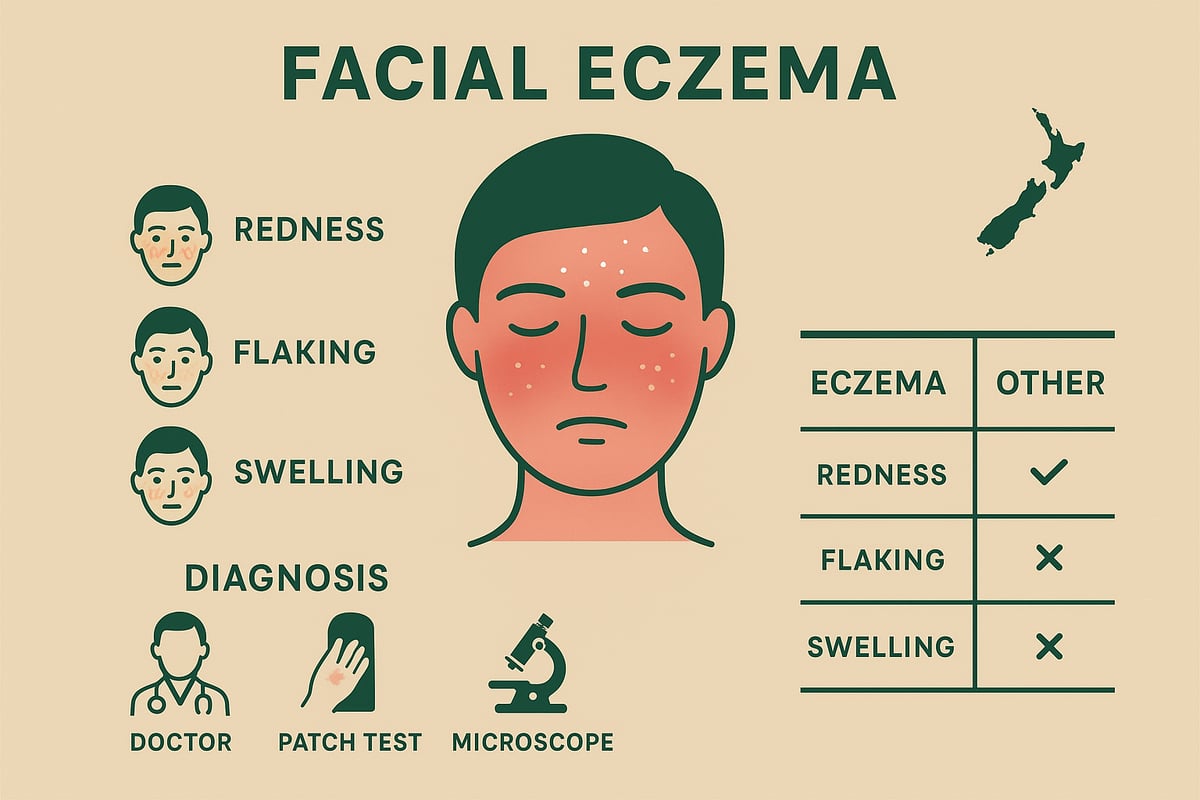
Key Symptoms of Facial Eczema
If you’re wondering, “Is this eczema on my face?” you’re not alone. The most common symptoms include visible redness, swelling, and inflamed patches, especially on the cheeks, eyelids, and forehead.
You might notice:
- Persistent itching, sometimes intense enough to disrupt sleep.
- Dry, scaly or flaky skin, often accompanied by a rough texture.
- Burning or stinging sensations, especially after using skincare products.
- Blistering, oozing, or crusting in more severe cases.
- Fine lines or wrinkling under the eyes, caused by chronic irritation.
For example, many teens in New Zealand report stubborn dry, red patches around the nose and mouth, which can be mistaken for irritation from cold weather or allergies. Recognising these signs early can help you manage eczema on my face more effectively.
How Eczema on the Face is Diagnosed
Diagnosing eczema on my face starts with a thorough skin examination by a GP or dermatologist. They’ll look closely at the affected areas, asking about your symptoms, triggers, and family history.
Common diagnostic steps include:
- Patch testing to pinpoint specific allergens or irritants that might be causing flare-ups.
- Blood tests to rule out infections or immune-related issues, especially if symptoms are severe or persistent.
- In rare cases, a tiny skin biopsy may be performed for a clearer diagnosis.
Early diagnosis is crucial for finding the right treatment plan and preventing long-term skin changes. Up to 30% of facial rashes seen in clinics are ultimately diagnosed as eczema, highlighting how common this challenge is. For more practical tips on managing and clearing eczema, check out Clearing eczema effectively.
Differentiating Eczema from Other Skin Conditions
Telling eczema on my face apart from other facial skin issues can be tricky. Psoriasis, rosacea, acne, and fungal infections often mimic some of the same symptoms, but there are key differences.
Comparison Table: Eczema vs Other Facial Conditions
| Condition | Key Features | Typical Location | Response to Moisturiser |
|---|---|---|---|
| Eczema | Itchy, red, flaky patches | Cheeks, eyelids, chin | Improves |
| Psoriasis | Thick, silvery scales | Hairline, forehead | Limited |
| Rosacea | Persistent redness, flushing | Nose, cheeks | No improvement |
| Acne | Pimples, blackheads | T-zone, chin | No improvement |
| Fungal | Circular, scaly patches | Any facial area | Worsens |
A professional assessment is vital to avoid misdiagnosis. For instance, some adults are initially treated for acne, only to later discover persistent symptoms are actually eczema on my face. Photographs, especially on NZ skin tones, can help your healthcare provider spot subtle differences. Trust your instincts and seek expert advice if things don’t improve.
Latest Treatments and Management Strategies in 2025
Living with eczema on my face can feel overwhelming, but 2025 brings new hope. Advances in medical treatment, skincare routines, and natural remedies offer tailored solutions for sensitive facial skin. Let’s explore what actually works, the science behind it, and how New Zealand’s own Mānuka extract is changing the game for people everywhere.
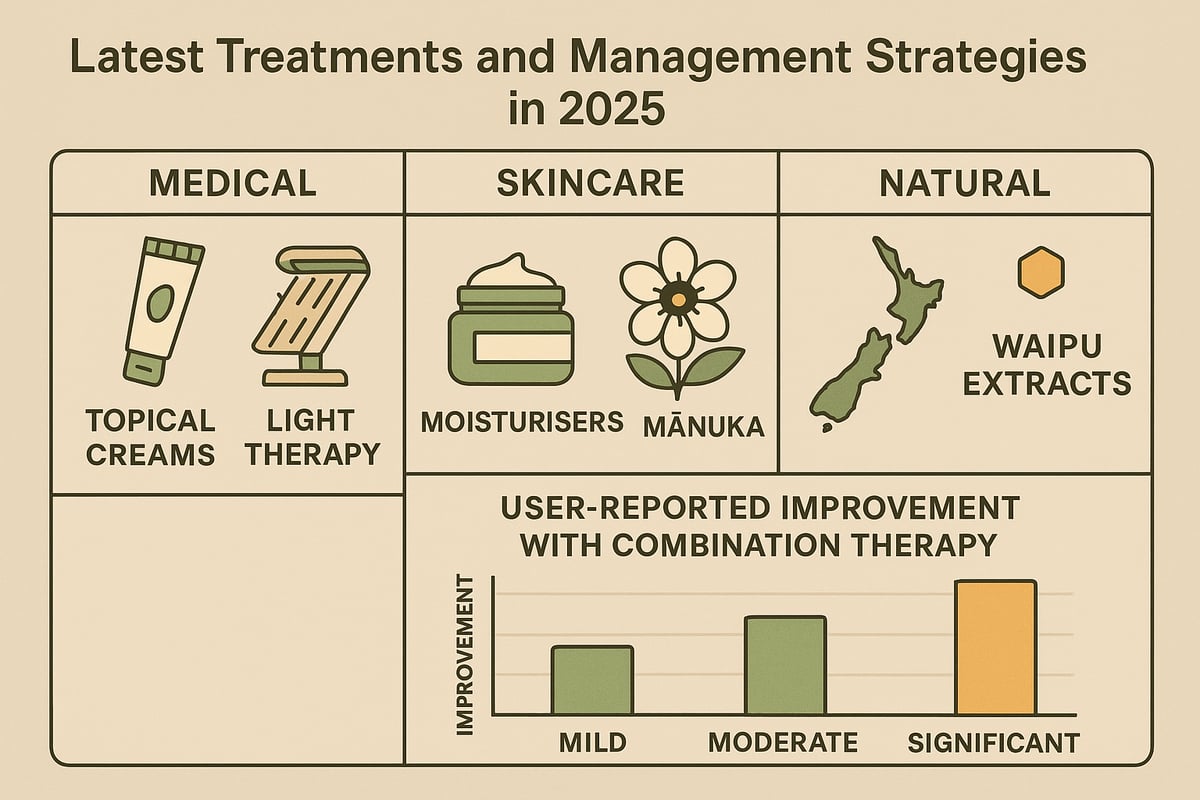
Medical Treatments: What’s New and Effective?
If you’re seeking relief for eczema on my face, recent years have seen breakthroughs in both effectiveness and gentleness of prescription options. Dermatologists now recommend low-potency topical steroids for short-term flare management, reducing risks of skin thinning. Topical calcineurin inhibitors, such as tacrolimus, are increasingly prescribed for delicate facial areas, offering targeted anti-inflammatory action without steroid side effects.
Non-steroidal prescription creams, like the latest phosphodiesterase inhibitors, are gaining popularity for long-term control. Oral antihistamines still play a role in managing itching, especially during severe flares, while immunosuppressants are reserved for persistent or severe eczema on my face.
Light therapy, specifically narrowband UVB, is emerging as a promising option for those with chronic, unresponsive eczema. Studies show that up to 70% of people report significant improvement with combination therapy, mixing topical and oral medications. For example, one adult found that using both a mild steroid cream and daily oral antihistamines finally calmed their facial eczema after years of trial and error.
Skincare Routine for Eczema-Prone Faces
Your daily skincare routine is crucial in managing eczema on my face. Choose fragrance-free and dye-free cleansers that won’t strip the skin’s natural oils. Gentle cleansing with lukewarm water and a soft cloth prevents irritation. Moisturising is essential—apply rich, ceramide-infused creams immediately after washing and before bedtime to lock in hydration.
Barrier repair creams containing lipids and ceramides help restore the skin’s protective layer, reducing the chances of future flares. Avoid exfoliants, alcohol-based toners, and strong actives, as these can trigger sensitivity and worsen eczema on my face.
- Use a gentle, fragrance-free cleanser morning and night
- Moisturise twice daily with a ceramide or Mānuka-infused product
- Avoid scrubbing and harsh towels
For more detailed routines and relief options, check out these eczema relief resources.
Natural Solutions: The Role of Mānuka Extract
Natural remedies are gaining momentum, especially for those seeking alternatives to steroids for eczema on my face. Mānuka, a traditional New Zealand botanical, is backed by scientific evidence for its anti-inflammatory and antimicrobial benefits. In 2025, Mānuka-based products are increasingly recommended by skincare experts for gentle, effective relief.
People who have switched to Mānuka-infused skincare often report less redness and itching, with some experiencing fewer flare-ups overall. The unique properties of Mānuka make it a standout choice for natural eczema support, especially on sensitive facial skin.
Using Waipu Extracts’ Full Spectrum Mānuka for Facial Eczema
Waipu Extracts offers a proprietary full-spectrum Mānuka extract, made right here in New Zealand. Their world-first extraction process preserves all active compounds, delivering maximum benefits for eczema on my face. Users report rapid itch relief, reduced redness, and stronger skin barrier after adding this extract to their daily routine.
The extract is gentle enough for sensitive skin and can be used directly or mixed with your moisturiser. Many customers found success with Waipu Extracts after other treatments failed, finally feeling comfortable in their own skin. For those seeking a natural, NZ-grown solution, Waipu Extracts stands out as a trusted choice.
Step-by-Step Guide: Managing and Preventing Facial Eczema Flares
Struggling with eczema on my face can feel overwhelming, but proactive daily habits make a real difference. Here’s a simple, five-step guide to help you manage and prevent those frustrating flares, with advice tailored for sensitive New Zealand skin.
Step 1: Identify Your Triggers
The first step in managing eczema on my face is understanding what sparks a flare. Track your daily routine, skincare products, weather changes, and stress levels in a simple diary or app.
- Note every new product or environmental change.
- Watch for reactions after eating, exercising, or switching detergents.
- Pay attention during stressful periods, as stress is a common trigger.
For example, you might spot that certain sunscreens or a change in laundry detergent coincide with increased redness or itching. By connecting the dots, you gain control over eczema on my face and can avoid known triggers in the future.
Step 2: Build a Gentle Skincare Routine
A consistent, gentle routine is essential for calming eczema on my face. Choose products designed for sensitive, eczema-prone skin, favouring those free from fragrance, dyes, and harsh chemicals.
- Cleanse with lukewarm water and a soft cloth.
- Moisturise immediately after washing, before bed, and whenever skin feels dry.
- Look for barrier creams enriched with ceramides or soothing natural ingredients like full-spectrum New Zealand Mānuka extract.
Switching to a Mānuka-infused moisturiser, for example, has helped many Kiwis reduce both flare frequency and severity. Small changes to your skincare can make a noticeable difference for eczema on my face.
Step 3: Use Targeted Treatments as Needed
When eczema on my face flares, targeted treatments provide relief. Apply prescribed medicated creams during active flares, but consider integrating natural alternatives like Waipu Extracts’ full-spectrum Mānuka for ongoing support.
- Always patch test new treatments before applying to your whole face.
- Alternate between medical and natural products as advised by your doctor.
- If you’re curious about real-life results with Mānuka, check out these Eczema trial week one insights.
Many find that combining medical and natural solutions creates a balanced, effective response to eczema on my face that minimises discomfort and speeds up recovery.
Step 4: Lifestyle Adjustments for Long-Term Control
Long-term control of eczema on my face often means tweaking daily habits. Stress, environmental factors, and lifestyle choices all play a role in flare frequency.
- Practice mindfulness, exercise, and get enough sleep to reduce stress.
- Shield your face from harsh weather using scarves, hats, or mineral sunscreen.
- Avoid smoking and limit exposure to air pollutants whenever possible.
One university student noticed a dramatic reduction in flares after starting regular meditation and switching pillowcases to silk. Simple adjustments can add up to healthier skin and fewer episodes of eczema on my face.
Step 5: When to Seek Professional Help
Sometimes, eczema on my face persists despite your best efforts. Know when it’s time to consult a dermatologist.
- Seek help if symptoms are severe, spreading, or unresponsive to over-the-counter and natural remedies.
- Persistent discomfort, oozing, or infection are red flags.
- Schedule follow-ups for ongoing support and treatment adjustment.
Early intervention can prevent complications and lead to faster recovery, making it easier to manage eczema on my face in the long run.
Living Well with Facial Eczema: Tips and Support
Living with eczema on my face can feel isolating, but you are not alone. Finding ways to manage both the physical and emotional effects is just as important as treating the skin itself. Let’s explore how to boost confidence, find comfort, and access the right support in New Zealand.
Emotional and Social Impacts
When eczema on my face flares up, it can truly affect how I feel about myself. Redness, itching, or visible patches may lead to self-consciousness and even avoidance of social situations.
Support groups and online communities offer reassurance that you’re not alone, especially as eczema becomes more common worldwide. According to global trends in eczema prevalence, more people are seeking connection and advice for visible symptoms.
Many New Zealanders find comfort by sharing stories and practical tips in local forums. If you are struggling, mental health resources and peer support can make a big difference.
Everyday Tips for Comfort and Confidence
Daily routines can make living with eczema on my face much easier. Opt for hypoallergenic, non-comedogenic makeup to reduce irritation. Mineral sunscreens help shield sensitive skin from harmful rays without clogging pores.
Choose soft, natural fibres for clothing and bedding—think silk pillowcases or cotton sheets—to minimise friction and discomfort. These changes can lead to noticeable improvements in comfort and confidence.
A few small adjustments can help you feel more in control of eczema on my face every day.
Resources and Support Networks in New Zealand
Finding the right support for eczema on my face is easier with dedicated NZ resources. Local eczema support groups, helplines, and online communities connect you to others who understand your journey.
Dermatologists and skin clinics across New Zealand provide expert care tailored to unique Kiwi skin needs. Educational tools like Waipu Extracts’ “Field Notes,” “Why It Works,” and “Library of Knowledge” offer trustworthy guidance for families and individuals.
Many parents, for example, have used these resources to manage their child’s eczema on face with confidence and clarity.
Frequently Asked Questions about Facial Eczema
Can eczema on my face go away completely? While many experience improvement, it is usually a long-term condition managed with ongoing care.
Is it safe to use natural extracts like Mānuka on sensitive skin? Yes, if products are formulated for sensitive skin and patch-tested first.
How often should I moisturise during a flare? Moisturise at least twice daily, or more if skin feels dry.
Should I avoid all makeup and skincare products? No, but choose gentle, fragrance-free options and patch test before use.
If you’re feeling overwhelmed by facial eczema and searching for a way forward, you’re not alone—I get how frustrating it can be to manage those flare ups day after day. We’ve talked through the latest science, real life triggers, and why natural options like full spectrum Mānuka extract are making such a difference for sensitive skin in 2025. If you’re ready to try a gentle yet effective approach that supports your skin’s barrier and calms irritation, it might be time to explore nature’s own remedy. Take the next step towards healthier, more comfortable skin and Get Your Mānuka Extract Today.