

Unlock the next generation of plant-based wellness with co2 extracts. These innovative ingredients are transforming natural skincare, supplements, and wellness products in 2025, offering a cleaner, more potent approach to harnessing botanical power.
Curious about what makes co2 extracts special? This essential guide breaks down how they’re made, why they’re safer and more effective than traditional methods, and how they’re elevating everything from sensitive skin solutions to premium health supplements—especially with Mānuka extracts from New Zealand.
Discover the science, compare extraction techniques, and learn how to choose the right co2 extracts for your needs. Ready to experience the future of natural wellness? Let’s get started.
What Are CO2 Extracts? The Science & Methods Explained
Curious about why co2 extracts are making such waves in natural health and beauty? Let’s unpack the science, the methods, and the unique advantages that set these extracts apart from traditional options, especially when it comes to sensitive botanicals like Mānuka from New Zealand.
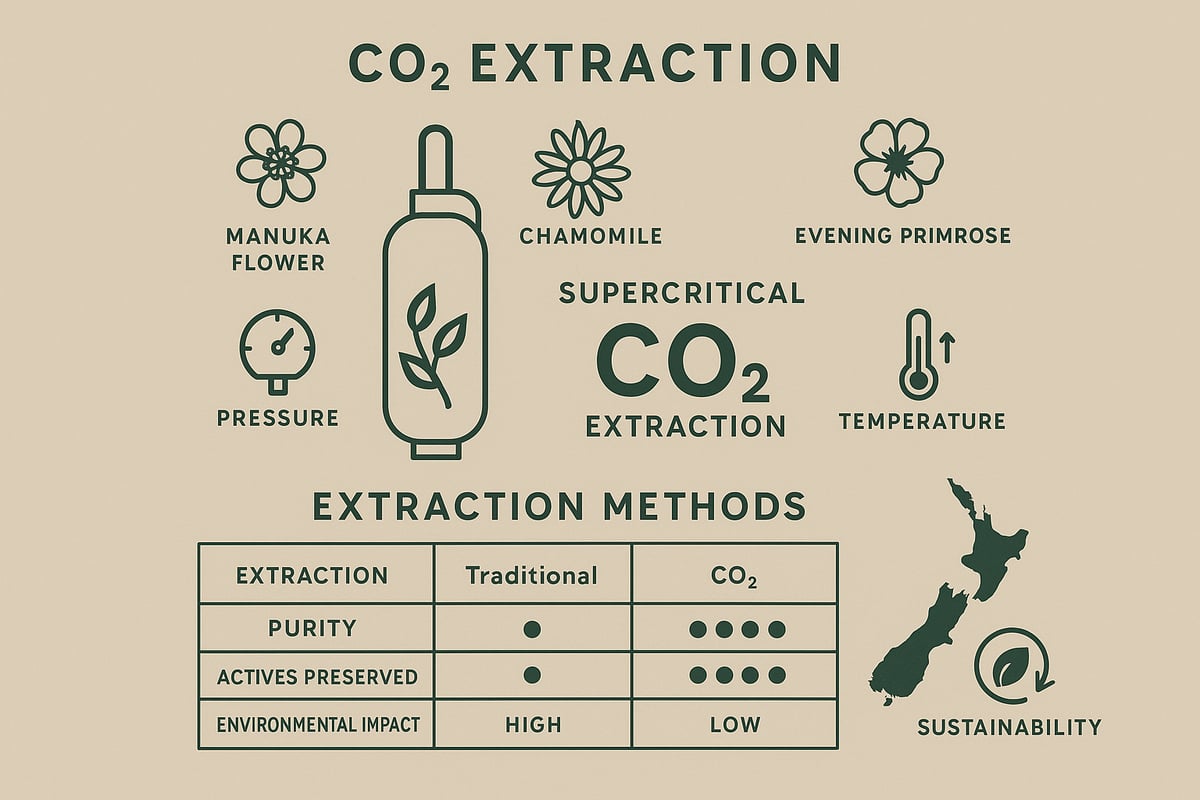
Understanding CO2 Extraction Technology
CO2 extracts are advanced plant concentrates obtained using carbon dioxide as a solvent. In supercritical CO2 extraction, CO2 is pressurised and heated until it behaves as both a gas and a liquid, allowing it to dissolve and gently pull out beneficial plant compounds. This process happens at relatively low temperatures, which protects delicate actives that might break down with heat.
Unlike subcritical extraction, which uses lower pressure and yields lighter, more volatile compounds, supercritical extraction produces a fuller spectrum of plant actives. CO2 is considered a clean, inert, and non-toxic solvent with GRAS (Generally Recognised as Safe) status, leaving no chemical residue behind. This makes it far safer and more environmentally friendly than traditional solvents like ethanol or hexane.
CO2 extraction is prized for its reduced waste and lower emissions. In New Zealand, Mānuka is carefully extracted using this method, preserving its unique healing properties. For a closer look at the science and sustainability behind this method, see this guide on green extraction of plant materials using supercritical CO2.
Types of CO2 Extracts: Select vs. Total
There are two main types of co2 extracts: “select” and “total.” Select extracts capture only the aromatic and volatile components, which makes them ideal for natural fragrances and aromatherapy. In contrast, total (or full-spectrum) extracts contain a broader range of compounds, including fatty acids, waxes, and antioxidants, offering enhanced skin and health benefits.
The choice between select and total depends on your application. For example, a chamomile select co2 extract delivers a beautiful scent, while the total version provides a richer, soothing profile for sensitive skin. It’s important to check product labels for correct INCI names, as select and total extracts are regulated differently due to their composition.
Key Components Found in CO2 Extracts
Co2 extracts are packed with valuable plant molecules, including terpenes, fatty acids, carotenoids, phytosterols, and tocopherols (vitamin E). Because the extraction process happens at low temperatures and without oxygen exposure, these extracts retain heat-sensitive and oxidation-prone actives that are often lost in other methods.
Compared to cold-pressed oils or macerates, co2 extracts deliver much higher concentrations of beneficial compounds. For instance, evening primrose co2 extract contains more unsaponifiables and potent actives than the pressed oil, often resulting in 2 to 3 times greater potency. This makes them a top choice for anyone seeking maximum efficacy from plant-based ingredients.
Comparing CO2 Extracts with Traditional Extraction Methods
Curious how co2 extracts stack up against older methods? Let’s break down the differences, from process to potency, and see why these next-gen extracts are making waves in skincare and wellness. We’ll use real data and examples, including the trusted Mānuka extract from New Zealand.
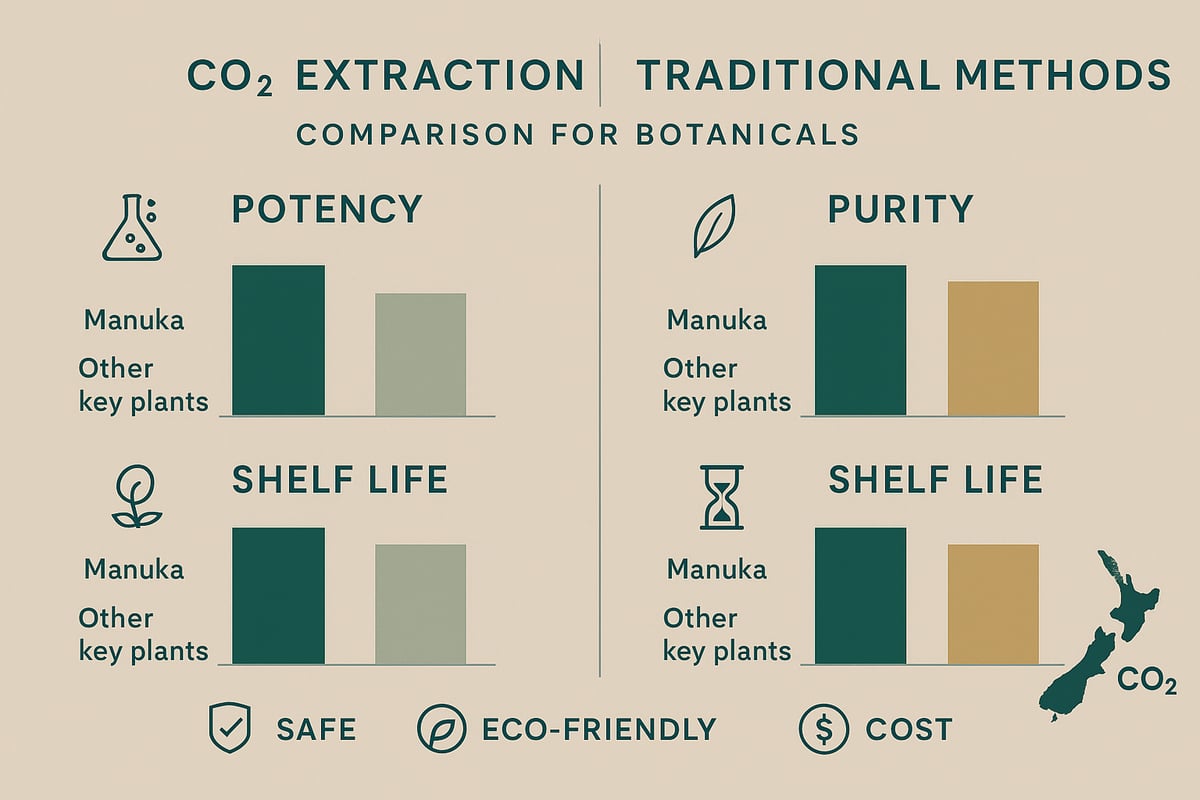
Maceration, Distillation, Solvent Extraction vs. CO2
Traditional methods like maceration involve soaking plant material in carrier oils, but this often yields low concentrations of actives and may introduce oxidation. Distillation, used for essential oils, relies on heat and steam, which can destroy delicate compounds and leaves behind non-volatiles. Solvent extraction uses chemicals like ethanol or hexane, which risk leaving residues and raise safety concerns.
In contrast, co2 extracts use supercritical carbon dioxide under precise pressure and temperature. This process is gentle and avoids toxic residues. It preserves both volatile and non-volatile actives, creating a full-spectrum product. Environmental benefits are significant too, as CO2 is recycled and emissions are lower compared to solvent methods. For a deeper dive into the ecological and efficiency advantages, see this supercritical CO2 extraction as green and waste-free technology overview.
For example, an arnica macerate contains just 0.02% triterpenes, while an arnica co2 extract can reach 3 to 7%. Mānuka co2 extracts from New Zealand preserve sensitive compounds lost in heat or solvents, offering a purer, more potent product.
Quality, Potency, and Safety
Co2 extracts stand out for their high selectivity and yield. The exclusion of oxygen during extraction means less risk of spoilage and a longer shelf life. Sensitive compounds like triketones in Mānuka, or azulenes in chamomile, remain intact, making these extracts more potent than their traditionally processed counterparts.
Safety is also improved, as there are no solvent residues and the process is inert. However, co2 extracts may contain natural allergens, similar to essential oils, so transparency from suppliers and access to analysis certificates are vital. Always look for detailed ingredient analysis and proper labelling when choosing co2 extracts for your products or routines.
Cost and Accessibility in 2025
Historically, co2 extracts cost more due to advanced equipment and expertise required. But as demand rises and production scales up, these extracts are becoming more accessible in New Zealand and globally. Their higher potency means you need less, so the price-per-use often balances out.
For example, Mānuka co2 extract might be pricier upfront than standard Mānuka oil, but its concentrated actives deliver better results at lower doses. The market trend is clear: co2 extracts are moving from niche to mainstream, especially in premium skincare and wellness products.
Real-World Examples: Ingredient Comparisons
Let’s look at how co2 extracts compare with traditional options using real data:
| Ingredient | Extraction Method | Key Actives (%) | Shelf Life | Colour |
|---|---|---|---|---|
| Arnica | Macerate | 0.02 triterpenes | 6 months | Yellow |
| Arnica | CO2 Extract | 3-7 triterpenes | 18 months | Golden |
| Chamomile | Essential Oil | High azulene | 12 months | Blue |
| Chamomile | CO2 Extract | Azulene, bisabolol | 24 months | Greenish |
| Mānuka (NZ) | Steam Distilled Oil | Triketones (low) | 12 months | Pale |
| Mānuka (NZ) | CO2 Extract | Triketones (high), flavonoids | 24 months | Amber |
As you can see, co2 extracts deliver more concentrated actives, longer shelf life, and a broader spectrum of plant benefits compared to traditional methods.
The Benefits of CO2 Extracts for Skin, Wellness & Beyond
Discovering the unique benefits of co2 extracts can transform your approach to natural health and beauty. These cutting-edge extracts are celebrated for their unmatched efficacy, purity, and eco-friendly credentials, especially when compared to traditional oils or tinctures. Let’s explore what makes them so powerful, with a special spotlight on Manuka co2 extracts from New Zealand.
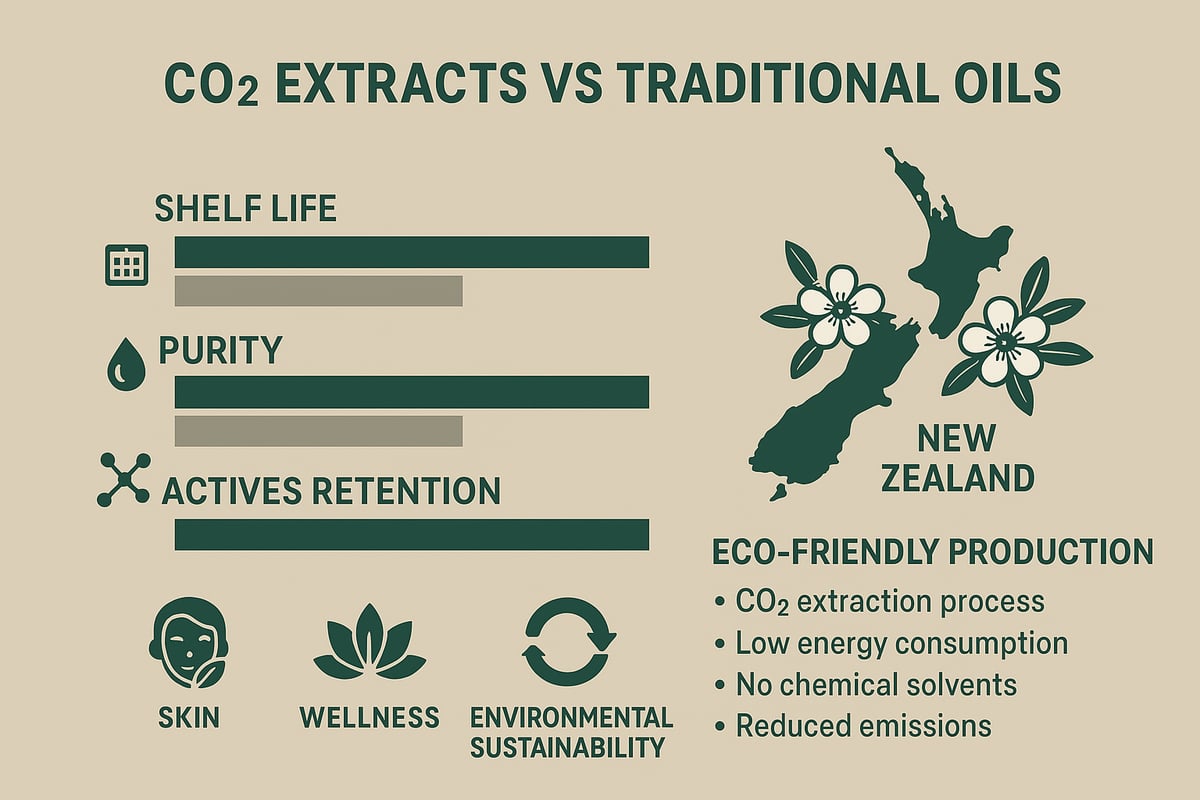
Superior Efficacy and Purity
Co2 extracts stand apart for their ability to capture the full spectrum of bioactive compounds found in plants. Unlike essential oils or cold-pressed oils, co2 extracts retain delicate antioxidants, anti-inflammatories, and minor actives that often get lost in traditional methods. For example, Manuka co2 extracts from New Zealand contain higher concentrations of triketones and flavonoids, key for skin repair and antimicrobial power.
This advanced extraction process ensures no solvent residues remain, making co2 extracts ideal for sensitive skin and wellness applications. Curious about the science behind these advantages? Explore the Supercritical CO2 extraction of essential oils for an in-depth look at extraction technologies and their impact on efficacy.
- Full-spectrum plant profile
- Higher potency than macerates or essential oils
- Gentle for sensitive and reactive skin
Enhanced Shelf Life and Stability
One of the standout benefits of co2 extracts is their remarkable shelf life and stability. Thanks to low-temperature processing, fragile compounds like fatty acids and antioxidants are preserved, reducing the risk of rancidity or oxidation. This means co2 extracts can last 1.5 to 2 times longer than cold-pressed or macerated oils.
Let’s take evening primrose as an example. The co2 extract version not only keeps more unsaponifiables intact but also outlasts the pressed oil in both potency and freshness. This long-lasting quality is a game changer for formulators and home users alike, ensuring your skincare or wellness products remain effective for longer.
Clean, Sustainable, and Environmentally Friendly
Choosing co2 extracts supports both your health and the planet. The process uses recyclable carbon dioxide, which leaves no toxic residues behind. Compared to solvent extraction, it consumes less energy and reduces environmental waste.
New Zealand is at the forefront of this movement, with eco-conscious producers like Waipu Extracts leading the way in sustainable Manuka extraction. Their commitment to gentle, chemical-free, and transparent production aligns perfectly with the growing demand for clean label products. When you choose co2 extracts, you’re making a choice that benefits both your well-being and the world around you.
Safety Considerations and Allergen Labelling
While co2 extracts are pure and free from solvent residues, they may still contain natural allergens found in essential oils. It’s crucial to read labels carefully and look for suppliers who provide transparent testing and analysis certificates.
Here are some quick tips for safe use:
- Always patch test new products
- Check for full INCI labelling and allergen disclosures
- Choose reputable suppliers with clear quality standards
By following these guidelines, you can confidently enjoy the benefits of co2 extracts, knowing you’re making a safe and informed choice for your skin and wellness.
Spotlight: Mānuka CO2 Extracts from New Zealand
Discover why Mānuka CO2 extracts from New Zealand are capturing the attention of natural health and skincare experts worldwide. These unique extracts bring together modern extraction science and centuries-old Mānuka healing traditions, creating a new standard for purity and potency.
The Unique Power of Mānuka CO2 Extracts
Mānuka has been revered in New Zealand for its powerful skin healing and antimicrobial benefits. When processed using CO2 extracts technology, the result is a full-spectrum product that captures the entire range of Mānuka’s bioactive compounds.
Unlike steam-distilled Mānuka oil, CO2 extracts retain high levels of triketones and flavonoids, which are crucial for antimicrobial and soothing effects. This makes CO2-extracted Mānuka ideal for sensitive skin, eczema, acne, and wound care. For a deeper dive into the science behind extraction, see this review on Supercritical CO2 technology for biomass extraction.
Table: Mānuka Compound Comparison
| Extraction Method | Triketone Content | Flavonoid Content |
|---|---|---|
| Steam Distillation | Moderate | Low |
| CO2 Extraction | High | High |
Waipu Extracts: Pioneering Full-Spectrum Mānuka Solutions
Waipu Extracts leads the way in New Zealand with state-of-the-art CO2 extracts of Mānuka. Their gentle, chemical-free process preserves all the therapeutic actives, resulting in visible results for eczema, dandruff, and acne-prone skin.

- Pure Mānuka Extract
- Hyper Blend for multi-action support
- Skin Rescue Balm for targeted relief
- Synergy Packages for holistic care
All products are made locally in Waipu, with a focus on transparency and sustainability. Customer reviews reflect a 4.9/5 satisfaction rating, with many seeing improvements within weeks. This commitment to quality ensures that every batch delivers the best of New Zealand’s native wellness.
How to Use Mānuka CO2 Extracts Effectively
Incorporating Mānuka CO2 extracts into your daily skincare is simple. For eczema or irritated skin, apply a diluted extract or balm directly to affected areas. For acne, blend a few drops into your nightly routine or use as a spot treatment. Families seeking natural solutions will appreciate the gentle action and versatility.
Helpful tips:
- Always patch test before first use
- Use sparingly as CO2 extracts are highly concentrated
- Store in a cool, dark place for longer shelf life
Anyone with sensitive skin, eczema, or persistent irritation can benefit from these powerful, natural extracts. Results are often visible in as little as two weeks with consistent use.
Top Applications of CO2 Extracts in 2025
From soothing sensitive skin to elevating natural fragrances, co2 extracts are transforming wellness routines in 2025. Let’s explore how these potent plant concentrates are making an impact across skincare, nutrition, and personal care.
Skincare & Dermatological Uses
Co2 extracts have quickly become a favourite in skincare, especially for those seeking natural, results-driven solutions. Their full-spectrum nature means they capture antioxidants, anti-inflammatories, and rare actives that other methods miss.
You’ll find co2 extracts like calendula, chamomile, rosehip, and Mānuka in creams, balms, serums, and cleansers. The unique Mānuka CO2 extract from New Zealand is especially popular for calming eczema, soothing acne, and supporting barrier repair.
Why choose co2 extracts for skin? They offer:
- Potent anti-inflammatory and antimicrobial benefits
- Greater actives for sensitive or compromised skin
- Cleaner profiles, ideal for those avoiding synthetic additives
Here’s a quick comparison:
| Ingredient | Traditional Oil | CO2 Extract |
|---|---|---|
| Calendula | Mild | Highly active |
| Mānuka (NZ) | Variable | Potent, full-spectrum |
| Chamomile | Soothing | More concentrated |
Food, Supplements & Wellness Products
The rise of co2 extracts in food and wellness is all about purity and potency. These extracts deliver higher concentrations of flavour and beneficial compounds, making them a smart choice for natural supplements and functional foods.
For supplements, co2 extracts provide enhanced bioavailability compared to cold-pressed oils. Think of cardamom CO2 extract, which not only elevates culinary creations but also supports digestive health.
In New Zealand, Mānuka CO2 extract is being explored for immune support and oral care products. Always check labels for food-grade status, as regulatory requirements differ from skincare applications.
Aromatherapy, Fragrance & Personal Care
Aromatherapists and formulators are embracing co2 extracts for their richer, more authentic scent profiles. Unlike essential oils, co2 extracts capture a broader range of plant volatiles, creating deeper, more complex fragrances.
You’ll see co2 extracts in natural deodorants, shampoos, and even toothpaste. Rose and chamomile co2 extracts, for instance, add luxury and efficacy to personal care routines.
For those sensitive to synthetic fragrances, co2 extracts offer a gentle yet vibrant alternative. Mānuka CO2 extract’s earthy aroma is prized in New Zealand-made balms and wellness blends.
How to Choose and Source Quality CO2 Extracts
Choosing quality co2 extracts is essential for anyone who wants the best results in natural skincare and wellness. With the market expanding in 2025, knowing how to evaluate and select the right extract can make all the difference. Let’s break down the essential steps to ensure you’re getting pure, potent, and safe co2 extracts for your needs.
Evaluating Purity and Transparency
Start by asking your supplier for a certificate of analysis for every batch of co2 extracts. This document should confirm the extract’s purity, list any potential allergens, and verify there are no unwanted residues. Make sure the supplier provides full transparency, including detailed INCI names and a clear ingredient breakdown.
A reputable supplier will never hesitate to share their testing protocols or allergen disclosures. Look for companies that are open about their extraction methods and provide third-party lab results. Here’s a quick checklist to help you vet co2 extracts suppliers:
- Certificate of analysis available for each batch
- Full INCI name and ingredient transparency
- Allergen list and safety data provided
- Extraction method details (supercritical or subcritical)
- No synthetic additives or dilution
Taking these steps ensures you’re choosing co2 extracts that are pure and trustworthy.
Key Criteria for Selecting the Right Extract
When selecting co2 extracts, match the extract type to your intended use. “Select” co2 extracts capture aromatic compounds, making them ideal for fragrance and aromatherapy. “Total” co2 extracts deliver a full-spectrum profile, including fatty acids and unique actives—perfect for skin and health benefits.
Consider shelf life and potency. Co2 extracts are typically more stable and concentrated than cold-pressed or macerated oils. For example, a total Mānuka co2 extract from Waipu Extracts offers higher triketone and antioxidant content than standard Mānuka oil, making it a powerful choice for eczema and sensitive skin.
Use this comparison table to guide your decision:
| Criteria | Select CO2 Extract | Total CO2 Extract |
|---|---|---|
| Main Use | Fragrance | Skin/Wellness |
| Actives Preserved | Volatiles | Full Spectrum |
| Potency | Moderate | High |
| Shelf Life | Long | Longer |
Always choose the co2 extracts that align best with your goals.
Tips for Formulators and Consumers in 2025
Stay informed about regulatory changes affecting co2 extracts, especially if you’re formulating products. Patch test every new extract to ensure it suits your skin, particularly for sensitive or allergy-prone individuals.
Incorporate co2 extracts gradually into your routine or formulations. Start with lower concentrations and increase as needed for desired results. Seek suppliers who offer education, formulation guidance, and transparent sourcing practices.
Practical formulation tips:
- Blend select and total co2 extracts for layered benefits
- Use airless packaging to extend shelf life
- Store in cool, dark conditions
For further support, refer to supplier directories and educational resources focused on co2 extracts. By making informed choices, you’ll unlock the full potential of these advanced, natural ingredients.
After exploring how CO2 extracts are transforming natural skincare and wellness in 2025, it’s clear that choosing potent, pure ingredients makes all the difference for healthier skin. If you’re ready to experience the full benefits of Mānuka—backed by advanced extraction, sustainable practices, and real customer stories—now’s the perfect time to take the next step for your skin. Whether you’re managing eczema, acne, or just want a clean, effective boost to your routine, you deserve the best nature has to offer.
Get Your Mānuka Extract Today