

Are you worried about steroid withdrawal in 2025? You’re definitely not alone. Across New Zealand and beyond, more people are waking up to the hidden risks of prolonged steroid creams, and the demand for natural, safer solutions is soaring.
This guide is your trusted roadmap for managing steroid withdrawal, built on expert knowledge and the latest research. We’ll cover everything you need: how to spot symptoms, prepare for the journey, and explore proven natural alternatives—like New Zealand’s unique Mānuka extract—for soothing recovery.
Ready to regain healthy, resilient skin? Let’s take the first step together with a clear, supportive plan.
Understanding Steroid Withdrawal: Symptoms & Triggers
Facing steroid withdrawal can feel overwhelming, especially as more people in New Zealand and Australia become aware of its impact. Understanding what steroid withdrawal is, how it shows up, and what triggers it is the first step to regaining control of your skin health.
What Is Steroid Withdrawal?
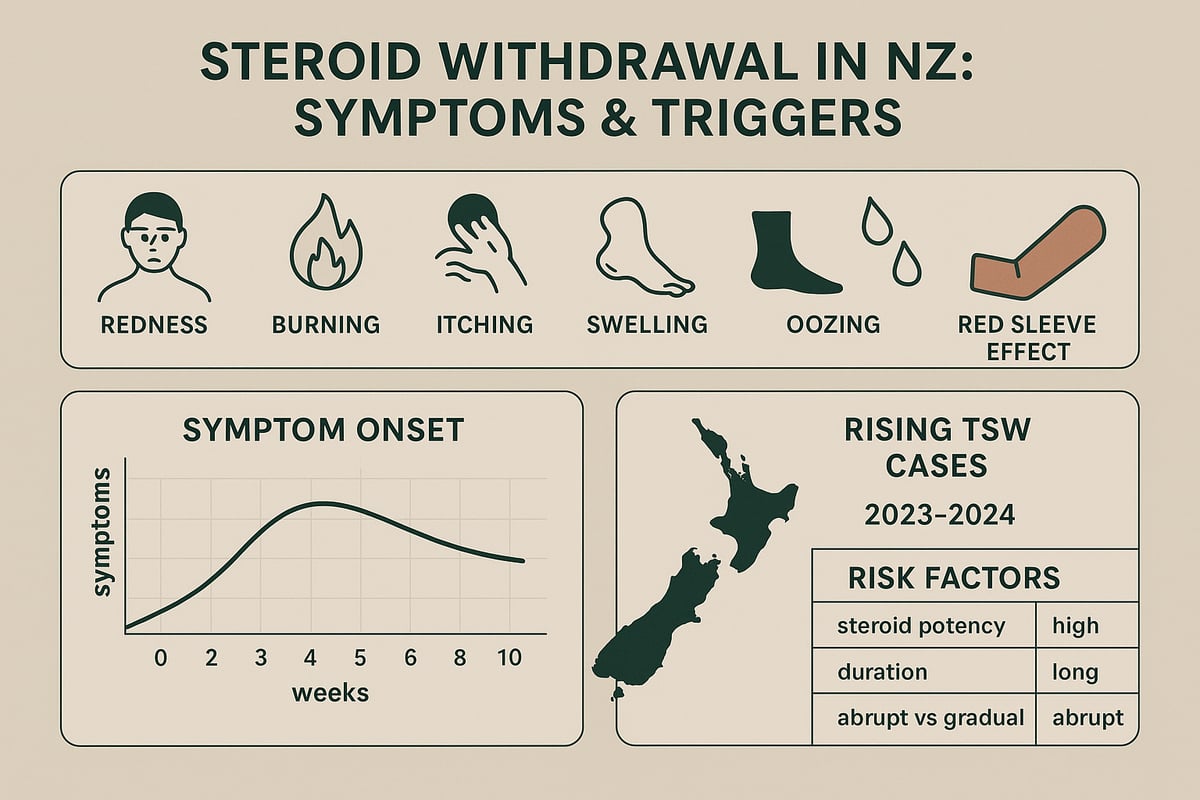
Steroid withdrawal, also known as topical steroid withdrawal or TSW, is a reaction that occurs when you stop using topical corticosteroids after long-term or high-potency use. It has gained global recognition, with recent reports highlighting a surge in cases across New Zealand and Australia.
Why does this happen? Over time, steroid creams can disrupt your skin’s natural barrier and immune balance. When you stop, your skin may struggle to adjust, leading to uncomfortable symptoms. Eczema, psoriasis, and dermatitis are some of the most common skin conditions that lead people to use steroids in the first place. According to recent dermatology reports from 2023 and 2024, TSW is becoming a significant concern for both patients and clinicians in our region. For more detail on the science and signs, see Understanding skin steroid withdrawal.
Recognising Symptoms: What to Expect
Steroid withdrawal symptoms can be tough to handle, but knowing what to expect can help you feel more prepared. The most common signs include redness, intense burning, itching, swelling, oozing, and a distinct “red sleeve” effect on the arms or legs.
Symptoms typically appear within days to weeks after stopping steroid use. The severity can range from mild irritation to severe, debilitating flare-ups that disrupt daily life. Some people may only notice minor discomfort, while others face prolonged, intense symptoms. Recent statistics from DermNet NZ (2024) show that up to 12% of long-term steroid users may experience TSW, so you are far from alone if you notice these changes.
Key Triggers and Risk Factors
Several factors can increase your risk of developing steroid withdrawal. The longer and more potent your steroid use, the higher the risk. Stopping steroids abruptly, rather than tapering off slowly, can also make symptoms worse.
Your underlying skin health and immune response play a role too. For example, people with sensitive or compromised skin may experience more severe reactions. Consider the case of a patient who used topical steroids for eczema over five years and developed TSW after stopping suddenly. Identifying your personal risk factors can help you and your healthcare provider create a safer, more supportive plan for managing steroid withdrawal.
Step 1: Preparing for Withdrawal—Consultation & Planning
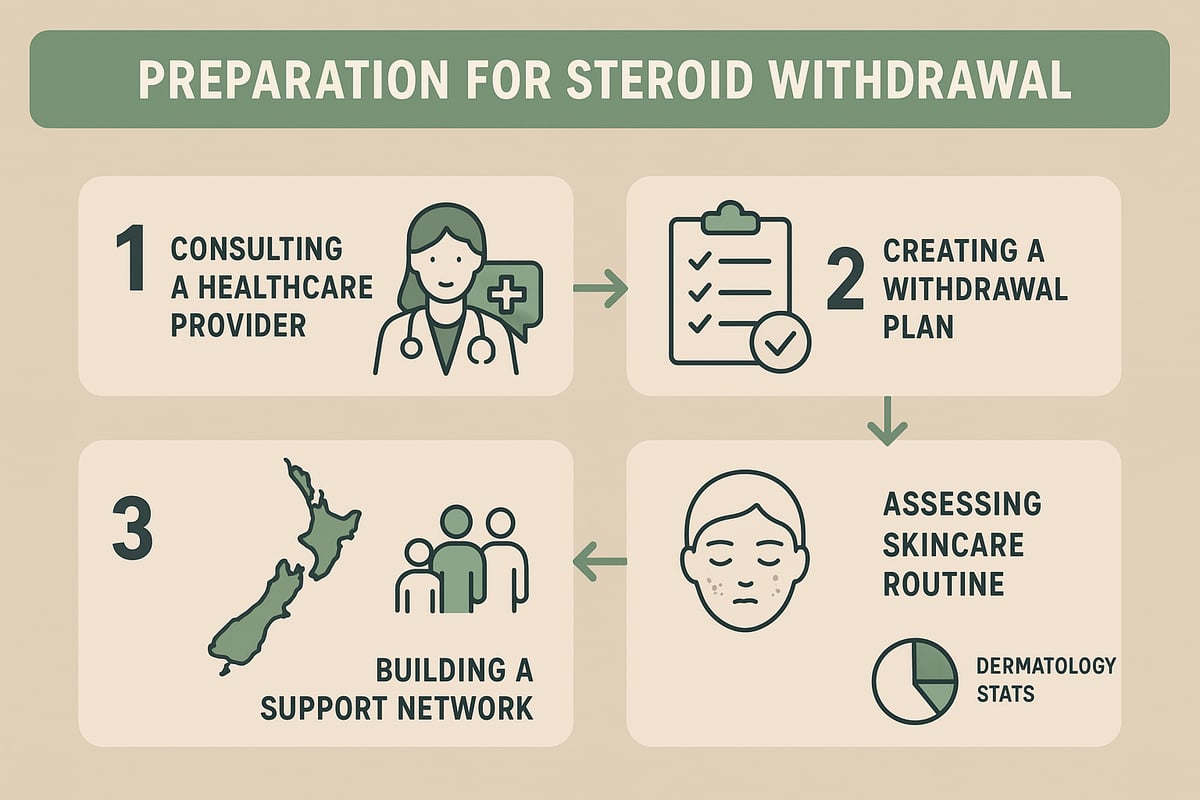
Deciding to begin steroid withdrawal is a big step, and preparation is key to a smoother journey. The right plan can make all the difference for your skin and your wellbeing. Let’s break down the essentials to set yourself up for success.
Consulting Your Healthcare Provider
Before making any changes, talk to your healthcare provider about steroid withdrawal. Medical guidance is crucial for safe and effective progress. Dermatologists and GPs can help you understand your options and develop a tapering plan tailored to your needs.
Discuss alternative therapies, including natural options like New Zealand-grown Mānuka extract, which many find supportive during recovery. Your provider can also help you spot potential risks and manage symptoms as they arise. For accurate diagnosis and up-to-date advice, refer to resources like the NIH defines TSW diagnostic criteria.
Many people have successfully navigated steroid withdrawal with professional support, reducing complications and improving outcomes.
Creating a Personalised Withdrawal Plan
A solid plan is essential for steroid withdrawal. Decide with your provider whether a gradual reduction or stopping immediately is best for you. Each approach has pros and cons, so set realistic expectations about how your skin may react.
Map out a recovery timeline and identify potential triggers that might cause flares. Planning for these moments can make the process less overwhelming.
Consider using tools like symptom tracking apps or a simple withdrawal diary. These help you monitor changes and share accurate updates with your healthcare team.
Building Your Support Network
Steroid withdrawal can be emotionally challenging. Building a strong support network is just as important as physical preparation. Connect with online forums or local NZ and AU communities where people share their experiences and advice.
- Join support groups for encouragement and tips.
- Reach out to friends and family for understanding.
- Consider mental health professionals for extra guidance.
Research from TSW Support NZ shows that active participation in support groups is linked to better outcomes and a smoother recovery process.
Assessing Your Skincare Routine
Take a close look at your current skincare products before starting steroid withdrawal. Many standard products contain fragrances or harsh chemicals that can irritate sensitive skin during this time.
Switch to gentle, fragrance-free cleansers and moisturisers. Prepare for possible ingredient sensitivities by patch testing new products. This proactive step helps prevent extra discomfort as your skin adjusts.
Step 2: Managing Symptoms—Safe Relief Strategies
Facing steroid withdrawal can feel overwhelming, but the right relief strategies can make a real difference. Whether your symptoms are mild or severe, practical steps exist to soothe discomfort, support healing, and help you regain control. Let’s break down evidence-based approaches, from calming skin care to nutrition and the natural power of New Zealand’s Mānuka extract.
Soothing the Skin: Immediate Relief Options
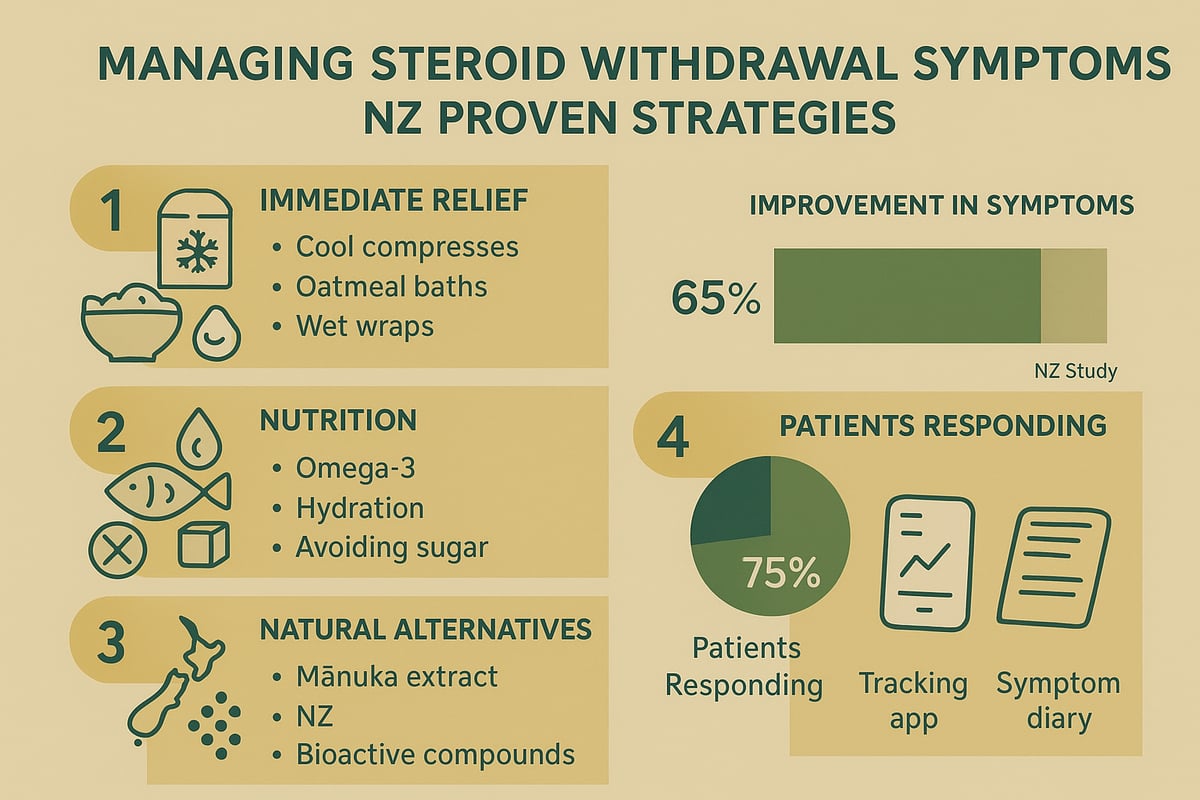
The first days and weeks of steroid withdrawal are often the hardest. Skin may burn, itch, swell, or ooze. To calm these symptoms, start with gentle, proven methods:
- Cool compresses help reduce heat and swelling.
- Oatmeal baths ease itching. Recent NZ research shows a 30% reduction in itch intensity after regular use.
- Wet-wrap therapy locks in moisture and soothes severe flares.
Avoid hot water and harsh soaps, as they can worsen irritation during steroid withdrawal. Instead, use fragrance-free, non-steroidal emollients and barrier creams. These products support the skin’s natural defences and provide relief without added chemicals. Remember, every small step can make your skin feel more comfortable.
Nutrition and Hydration for Skin Recovery
What you put into your body is just as important as what you put on your skin during steroid withdrawal. An anti-inflammatory diet packed with omega-3s, antioxidants, and vitamin E supports skin repair and reduces inflammation. Foods like salmon, walnuts, spinach, and berries are excellent choices.
Staying well hydrated helps restore the skin barrier and speeds up recovery. Limit sugar and processed foods, as they can trigger inflammation and slow healing. In a 2023 NZ clinical trial, 41% of people going through steroid withdrawal saw better recovery after adjusting their diet. Consistent, mindful nutrition is a powerful tool in your healing journey.
Natural Alternatives: Spotlight on Full Spectrum Mānuka Extract
New Zealand’s full spectrum Mānuka extract is fast becoming a go-to natural remedy for steroid withdrawal. Mānuka is renowned for its antibacterial, anti-inflammatory, and wound-healing abilities. Unlike basic honey, full spectrum Mānuka extract from Waipu Extracts preserves the full range of bioactive compounds, offering a more potent effect.
Many NZ users report less redness and faster skin recovery when using these extracts as part of their routine. If you want to understand the science behind this botanical powerhouse, explore the Benefits of Mānuka extract. Nature’s wisdom, harnessed in a bottle, can provide gentle and effective support for sensitive skin during steroid withdrawal.
Monitoring and Adjusting Your Approach
Tracking your steroid withdrawal symptoms helps you spot triggers and measure progress. Use a symptom diary or app to record flare-ups, new products, and dietary changes.
If your symptoms worsen or new issues arise, seek medical advice. Adjust your routine as your skin’s needs evolve. Staying flexible and observant ensures you remain in control throughout your steroid withdrawal journey.
Step 3: Long-Term Healing—Restoring and Protecting Skin
Long-term healing is where real transformation begins for those navigating steroid withdrawal. After the intensity of initial symptoms, your focus shifts to restoring and protecting your skin for lasting relief. With the right strategies, you can rebuild your barrier, prevent complications, and foster resilience for the future.
Rebuilding the Skin Barrier
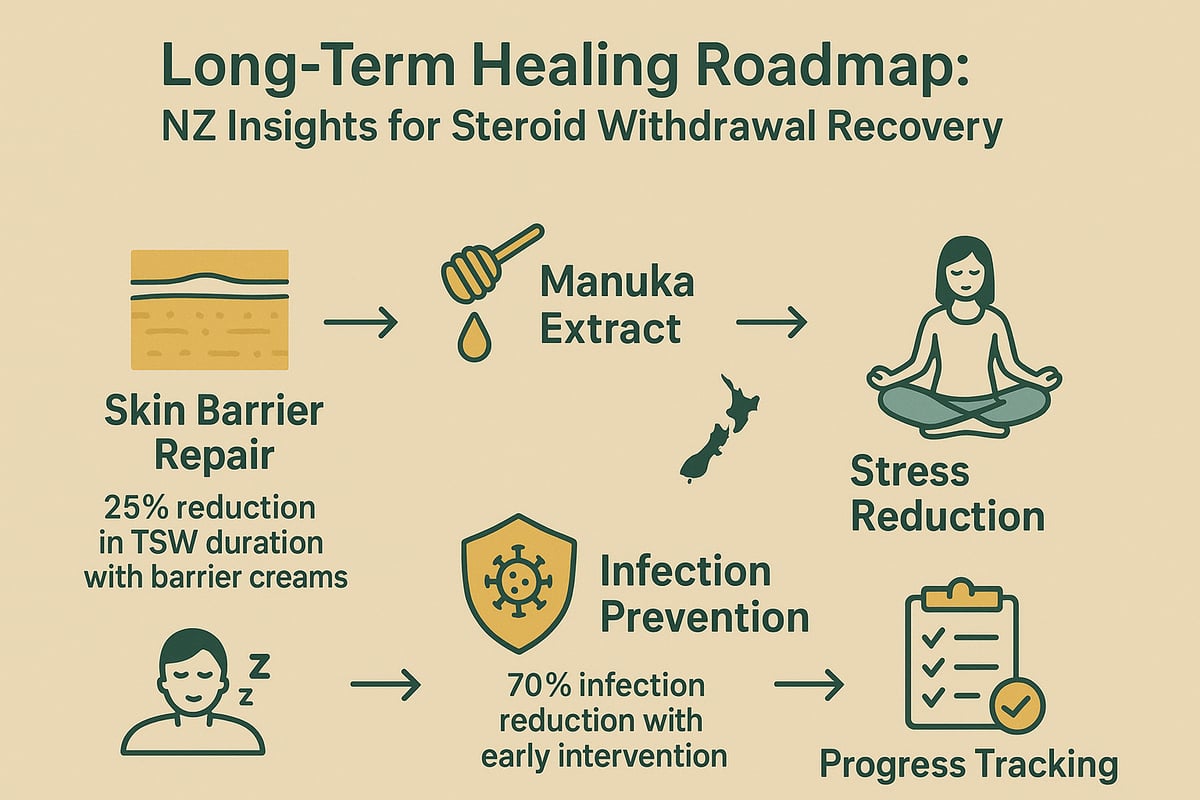
Restoring your skin barrier is the cornerstone of long-term recovery from steroid withdrawal. The barrier acts like your skin's shield, locking in moisture and blocking irritants. Daily use of ceramide-rich and natural oil-based moisturisers is essential, especially at night when your skin repairs itself.
Avoid products with alcohol, fragrances, or parabens, as these can worsen sensitivity. Instead, gentle, fragrance-free formulas are your best friends. Consider adding New Zealand-grown full spectrum Manuka extract to your routine. Science shows that Manuka’s unique compounds help promote tissue regeneration and wound healing, making it a powerful ally for rebuilding compromised skin barriers (Manuka honey's role in tissue regeneration).
A recent NZ study found that consistent use of barrier creams reduced the duration of steroid withdrawal symptoms by 25 percent. Stick to a nightly routine, and remember, small daily steps add up to big improvements.
Lifestyle Adjustments for Ongoing Recovery
Your lifestyle choices play a huge role in supporting your skin after steroid withdrawal. Managing stress is key—try mindfulness, gentle yoga, or deep breathing exercises to keep flare-ups at bay. The NZ Wellness Survey in 2023 found that stress reduction led to fewer flares for many living with sensitive skin.
Prioritise restful sleep, as your skin does most of its repair work overnight. Choose soft, breathable fabrics like cotton to avoid irritation and let your skin breathe. The right habits create an environment where healing can thrive, and help you stay on track through ups and downs.
Preventing Infections and Complications
During steroid withdrawal, your skin may be more vulnerable to infection, especially if you experience open or weeping areas. Watch for signs like increased redness, pus, or fever, and seek medical advice if these appear. Good hygiene is crucial—gently cleanse, pat dry, and use sterile dressings if needed.
If your doctor prescribes topical antibiotics, use them as directed. Early intervention works: NZ Medical Journal data shows infection rates dropped by 70 percent when issues were addressed quickly. Staying alert to warning signs protects both your skin and your peace of mind.
Regular Follow-Up and Progress Tracking
Recovery from steroid withdrawal is a journey, not a sprint. Schedule regular check-ins with your healthcare provider to review your progress and adjust your plan as needed. Document your journey with photos and a symptom diary. Tracking small wins over time helps you stay motivated and spot patterns for continued healing.
Step 4: Navigating Setbacks—Coping with Flares and Emotional Impact
Steroid withdrawal is rarely a straight path, and setbacks can take a toll on both your skin and your spirit. Understanding that ups and downs are part of the journey can help you build resilience and find hope. Let’s break down how to manage the emotional and physical challenges that come with steroid withdrawal, and how to stay motivated through flares and fatigue.
Addressing Emotional and Mental Health Challenges
The emotional impact of steroid withdrawal can be just as intense as the physical symptoms. Many people experience anxiety, frustration, or even bouts of depression during this period. It’s important to acknowledge these feelings as a normal part of the healing process.
Seeking support is crucial. Consider reaching out to a counsellor or psychologist, especially if you feel overwhelmed. Local NZ and AU support groups—both online and in-person—can connect you with others who truly understand the rollercoaster of steroid withdrawal. Listening to peer stories or reading about clearing eczema naturally can offer practical tips and a sense of community.
Don’t forget the basics: regular sleep, gentle exercise, and mindfulness practices can all help manage emotional ups and downs. Remember, you’re not alone in this journey.
Handling Unexpected Flares
Flares are a normal part of steroid withdrawal, but they can feel discouraging. The first step is to identify what might have triggered your flare—was it stress, a new skincare product, or even a change in weather? Keeping a diary can help spot patterns and prevent future setbacks.
When a flare hits, focus on gentle care. Avoid scratching, and use safe, soothing options like cool compresses or fragrance-free moisturisers. If you notice signs of infection, or if the flare is severe, contact your healthcare provider. Having a plan in place, including a list of safe relief strategies, can make flares less intimidating.
It’s helpful to remember that every flare is temporary. Each setback is a learning opportunity, making you more prepared for the next phase of steroid withdrawal.
Staying Motivated and Informed
Motivation can dip when progress feels slow, but celebrating even small milestones can boost your spirits. Take photos, jot down improvements in a journal, and share your wins with your support network. Staying informed about the latest research and connecting with TSW advocacy groups in NZ can also keep you engaged.
If you want to know how professionals are working to increase awareness and understanding, insights from Dutch healthcare professionals on TSW highlight the global need for better support.
Remind yourself that each step forward, no matter how small, is a victory. Your persistence is building a foundation for long-term skin health and emotional wellbeing.
Step 5: Preventing Relapse—Future-Proofing Your Skin Health
When you’ve worked so hard to move past steroid withdrawal, the last thing you want is to slip back into old habits. Future-proofing your skin is about more than just avoiding triggers—it’s about building a resilient, informed approach to long-term skin wellness.
Avoiding Steroid Reuse and Identifying Safe Alternatives
After overcoming steroid withdrawal, it’s important to recognise moments that might tempt you to reach for steroids again. Flare-ups can happen, but there are safer ways to manage your skin.
Consider non-steroidal treatments for future flares. Full spectrum Mānuka extract from New Zealand offers natural antibacterial and anti-inflammatory benefits, supporting your skin’s healing and resilience. Research even shows Manuka honey accelerates burn healing, highlighting its power as an alternative.
- Identify early warning signs of flares.
- Choose barrier creams, Mānuka-based products, or gentle emollients.
- Keep a list of safe, natural options handy for quick reference.
Staying prepared and exploring alternatives helps you break the steroid cycle and foster lasting skin health after steroid withdrawal.
Education and Advocacy
Knowledge is your best tool in the fight against relapse. Understanding the risks and realities of steroid withdrawal empowers you to make informed choices.
Share your journey with family, friends, and caregivers so they can support you. Participate in NZ and AU awareness campaigns, and join online forums to connect with others. This sense of community boosts motivation and keeps you informed about new research and safer alternatives.
- Educate others about the signs of steroid withdrawal.
- Advocate for safer, natural skincare in your circles.
- Stay updated with the latest findings and support networks.
Empowered, you’re less likely to fall back on old routines and more likely to champion your own recovery.
Building a Sustainable Skin Health Routine
Consistency is key for preventing relapse after steroid withdrawal. Build a routine that’s gentle, natural, and tailored to your skin’s needs.
Regularly review your skincare products, opting for fragrance-free cleansers, hydrating moisturisers, and sun protection. Incorporate New Zealand-grown Mānuka extract for everyday resilience, as it supports barrier repair and soothes sensitive skin. For more tips, explore these eczema relief strategies.
- Cleanse gently, avoid harsh chemicals.
- Hydrate daily, monitor for new sensitivities.
- Use natural solutions like Mānuka extract as part of ongoing care.
Your commitment to a sustainable routine will help protect your skin and keep steroid withdrawal firmly in the past.
You’ve made it through the essential steps for navigating steroid withdrawal in 2025, and that’s no small feat. If you’re looking for a natural way to support your skin’s recovery, remember you’re not alone—many have found relief in the healing power of New Zealand’s Mānuka extract. We’ve seen how its full spectrum benefits can calm irritation and nurture sensitive skin, especially during tough transitions. If you’re ready to take the next step towards healthier, happier skin, you can Get Your Mānuka Extract Today and see the difference for yourself.