

Ever wondered why some skin areas age faster or react differently to products? In 2025, understanding the unique needs of every skin region is the secret to healthier, more radiant skin.
This essential guide will help you recognise, care for, and treat your distinct skin areas, ensuring optimal skin health at every stage. You’ll discover the science behind each skin zone, the latest trends, and natural solutions like New Zealand’s Mānuka extracts.
Ready to unlock your skin’s full potential? Dive in for expert-backed advice, proven routines, and the newest breakthroughs to nurture every part of your skin.
The Science of Skin Areas: Anatomy and Function
Every part of your skin tells a different story. To truly care for your skin areas, it helps to understand what makes each region unique. Let’s break down the fascinating science behind your body's largest organ.
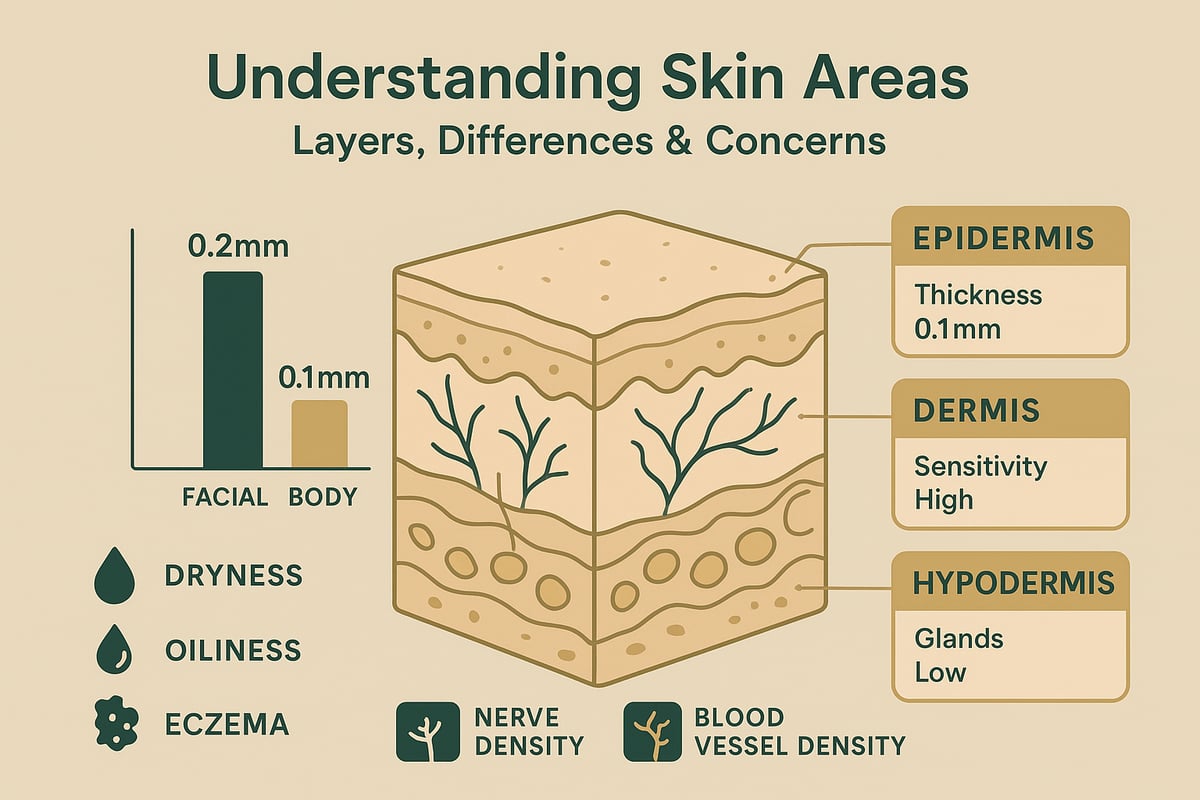
Understanding Skin Layers and Regional Differences
The skin is made up of three main layers: the epidermis (your outer shield), the dermis (where collagen gives strength and bounce), and the hypodermis (the cushioning, fatty layer). Not all skin areas are created equal. For example, facial skin is up to four times thinner than body skin (DermNet NZ, 2024), making it more delicate and prone to visible ageing.
Areas like the face, hands, and scalp have different levels of sensitivity and thickness. The under-eye region, for example, has fewer sebaceous glands and a finer blood supply, so it ages faster than your cheeks. Nerve endings are also more concentrated in certain skin areas, which explains why some spots feel more sensitive to touch or irritation.
Understanding these differences is key. Tailoring your routine to the unique needs of your skin areas can help protect, repair, and revitalise each zone.
Factors Influencing Skin Health by Area
What affects the health of your skin areas? Sun exposure is a big one. Exposed skin, like your face and arms, faces more UV damage, while covered areas usually stay protected but might become drier.
Friction and pressure points, such as elbows, knees, and feet, can lead to roughness or irritation. Sweat glands are unevenly distributed, with some zones more prone to breakouts or discomfort. Hormones also play a role, especially on the face, back, and chest, where oil production can fluctuate. If you struggle with shine or breakouts on your T-zone but not your jawline, you’re not alone. Over 80% of people experience area-specific skin concerns (Australasian Journal of Dermatology, 2023). For more on how oil behaves differently across facial regions, check out Managing Oil on Facial Zones.
Recognising what influences your skin areas helps you make smarter choices about protection and care.
Common Skin Concerns by Region
Different skin areas come with their own challenges. Dryness is common on the shins and forearms, while the T-zone often battles oiliness and breakouts. The skin around your eyes and lips is more sensitive, meaning it needs gentler products.
Hyperpigmentation tends to show up in spots that get a lot of sun, like the face and chest. Eczema often appears on flexural surfaces, like the inside of elbows or behind the knees. No wonder personalised routines deliver better results—one-size-fits-all just doesn’t work for diverse skin areas.
By tuning in to the unique needs of your skin areas, you can target dryness, breakouts, and sensitivity for healthier skin overall.
Emerging Trends in Skin Area Care for 2025
In 2025, skin care is all about embracing the uniqueness of every region. As we learn more about skin areas, brands and experts are developing smarter, more tailored solutions. Let’s explore the ingredient breakthroughs, innovative techniques, high-tech tools, and natural wonders reshaping how we treat our skin areas.

Ingredient Innovations for Targeted Results
Formulators are turning to next-generation ingredients designed for specific skin areas. Instead of blanket solutions, serums and creams are now tailored to address the unique needs of the eyes, hands, chest, and more. Peptides are favoured for the delicate eye zone, ceramides for hardworking hands, and niacinamide for smoothing the chest. Vitamin C is especially popular for brightening the décolletage, while new complexes address both sensitivity and resilience. According to Mintel, 62% of skincare users now seek targeted solutions for their skin areas. Tailored ingredients are proving more effective than traditional all-in-one products, delivering visible, region-specific results.
Advanced Application Techniques
The way we apply products is evolving just as quickly as the formulas themselves. Multi-zone routines are gaining traction, encouraging users to layer and spot-treat products based on their skin areas’ needs. For example, oily T-zones benefit from lightweight gels, while cheeks may need richer creams. Facial mapping, once exclusive to professionals, is now accessible for home routines. Korean multi-step processes have inspired Western routines, offering a personalised touch for every skin area. Application technique is now seen as just as important as product choice, empowering people to truly customise their care.
Tech and Tools for Precision
Technology is revolutionising how we understand and care for our skin areas. Home-use skin analysis devices scan and assess different regions, providing real-time feedback on what each area needs. AI-powered apps can recommend custom routines, while LED masks target specific zones with different light wavelengths. The personalised skincare tech market surged by 35% in 2024, as more people invest in tools that offer clinical-level insight at home. These advances are helping users pinpoint issues and optimise routines for every unique skin area, from the scalp down to the feet.
Natural Solutions and the Rise of Mānuka Extracts
Natural, multi-benefit ingredients are seeing a surge in popularity, especially for sensitive or problem-prone skin areas. New Zealand’s Mānuka extract stands out for its antibacterial and anti-inflammatory effects, making it a top choice for eczema patches, irritation, and breakouts. Mānuka’s gentle yet powerful properties offer targeted relief where it’s needed most. For a scientific breakdown of how these extracts benefit various skin areas, see Mānuka Extracts for Skin Health. As more people seek natural solutions, Mānuka is quickly becoming the hero ingredient for comprehensive, area-specific skin care.
Step-by-Step Guide: Caring for Each Skin Area
Unlocking radiant skin starts with understanding your unique skin areas. Each region of your body has its own challenges, sensitivities, and needs. By tailoring your approach, you can address concerns right where they start, from your forehead down to your feet. Let’s break down the best ways to care for each zone, backed by the latest research and natural solutions like New Zealand’s Mānuka extract.

![]() Face: Zoning In on the T-Zone, Cheeks, and Eyes
Face: Zoning In on the T-Zone, Cheeks, and Eyes
Your face is a mosaic of different skin areas, each with their own quirks. The T-zone often battles oiliness, while cheeks might experience dryness or sensitivity. Start with a gentle cleanser that targets oil without stripping moisture. Double cleansing is ideal for makeup-heavy days, especially in the T-zone.
For the delicate eye area, use your ring finger to tap on a specialised cream, reducing the risk of tugging. It’s crucial to remember that 70% of facial skin issues are area-specific, so targeted care pays off. Incorporate a lightweight serum for the T-zone and a richer moisturiser for cheeks. Mānuka extract can help soothe redness and support barrier repair in sensitive regions, making it a versatile addition to your routine.
Scalp and Hairline: Balancing Oil and Sensitivity
The scalp is often overlooked, yet it’s one of the most important skin areas for overall health. Regular scalp exfoliation removes buildup and supports balanced oil production. Choose a targeted shampoo for your main concern, whether it’s dandruff at the edges or dryness at the crown.
Weekly scalp masks can deliver hydration where it’s needed most. If you’re battling persistent flakes or irritation, consider natural remedies like Mānuka extract, known for its calming and antibacterial properties. For more in-depth guidance, explore our Dandruff and Scalp Area Care resource for solutions tailored to this unique region.
Hands, Elbows, and Knees: Combatting Roughness
Hands, elbows, and knees are skin areas that face constant use and environmental stress. Intensive moisturising is your first line of defence, especially after washing or during colder months. Try exfoliating weekly to slough off dead skin and boost absorption of creams.
At night, apply an occlusive balm and cover with cotton gloves or socks for deeper hydration. Overnight therapies work wonders for rough patches, locking in moisture while you sleep. Mānuka extract’s soothing effects can help heal cracks and support the skin’s natural repair process, making it a smart choice for these hardworking areas.
Back, Chest, and Shoulders: Managing Acne and Irritation
The skin areas on your back, chest, and shoulders are prone to breakouts and irritation, especially due to clothing friction. Use non-comedogenic cleansers and lightweight sprays to avoid clogging pores. Spot treatments with ingredients like salicylic acid are effective for tackling bacne and chest blemishes.
Consider a table for quick reference:
| Area | Concern | Solution |
|---|---|---|
| Back | Acne, friction | Salicylic acid spray |
| Chest | Breakouts | Niacinamide serum |
| Shoulders | Irritation | Lightweight lotion |
Clothing can worsen irritation, so wear breathable fabrics when possible. Mānuka extract offers gentle antibacterial support, helping to calm redness and prevent further flare-ups in these sensitive regions.
Feet: Addressing Dryness and Calluses
Feet are among the most neglected skin areas, yet they bear the brunt of daily activity. Regular exfoliation removes tough skin, while intensive foot creams keep dryness at bay. Urea-based treatments are particularly effective for cracked heels, drawing in moisture and softening calluses.
A consistent routine is key, especially since 40% of adults experience foot dryness. Don’t forget to massage in your cream at night and slip on cotton socks for maximum absorption. Mānuka extract’s natural healing abilities can further soothe and protect problem-prone feet, rounding out your area-specific care.
The Power of Mānuka Extracts: A New Zealand Innovation for Skin Health
Discovering the right remedy for different skin areas can feel overwhelming, but New Zealand’s Mānuka extract is changing the game. This natural wonder offers a targeted approach, delivering relief and resilience where you need it most. Let’s explore how Mānuka is transforming care for skin areas in 2025.
The Science Behind Mānuka Extracts
Mānuka extract is packed with unique bioactive compounds that make it a powerhouse for skin areas needing special care. Its antibacterial action helps fight acne-causing bacteria, while anti-inflammatory and antioxidant properties soothe irritation and defend against environmental stressors. Clinical studies reveal that regular use of Mānuka extract can reduce eczema flare-ups, calm sensitive skin, and support faster recovery from breakouts.
For those with delicate skin areas, such as around the eyes or lips, Mānuka’s gentle yet effective nature offers a safe solution. Its natural composition means fewer harsh reactions, making it a trusted choice for families and anyone with sensitive skin.
How Mānuka Extracts Target Specific Skin Areas
One of the greatest strengths of Mānuka extract is its versatility across various skin areas. You can apply it to your face for redness and acne, your scalp to manage dandruff, and your body for stubborn eczema patches. When blended with other natural ingredients, Mānuka works synergistically, amplifying results for even the most challenging skin areas.
Real-life stories speak volumes. Many have seen stubborn eyebrow eczema soothed by targeted Mānuka care. For expert-backed advice on treating sensitive eyebrow skin, see Eczema Solutions for Eyebrow Skin. This holistic approach empowers you to tackle each region’s unique needs with confidence.
Waipu Extracts: Harnessing Full Spectrum Mānuka for Comprehensive Skin Solutions
Waipu Extracts stands at the forefront of skin areas innovation with its world-first full spectrum Mānuka extraction process. This method preserves every beneficial compound, ensuring maximum potency and efficacy for all skin areas. Customers have shared inspiring testimonials, from finding relief for eczema and dandruff to finally clearing persistent acne.

Waipu Extracts also champions sustainability, sourcing premium Mānuka directly from New Zealand’s pristine landscapes. This commitment not only supports your skin areas but also protects the environment, making it a win-win for your health and the planet.
Customising Your Skin Routine for 2025: Expert Tips and Future Directions
Everyone’s skin is unique, and the journey to healthier skin areas in 2025 starts with personalisation. Instead of guessing, you can now assess your skin zones with precision, tailoring your routine to each region’s needs for the best results.
Personalising Routines Based on Skin Area Needs
Start by examining your skin areas closely. Take note of which zones are oily, dry, sensitive, or prone to breakouts. Building a routine means selecting products and steps for each region. For example, use lightweight serums on oily skin areas like the T-zone and richer creams where you see dryness, such as cheeks or shins.
A simple table can help:
| Skin Area | Common Need | Best Approach |
|---|---|---|
| T-zone | Oil control | Gel cleanser, serum |
| Cheeks | Hydration | Cream, gentle exfoliant |
| Scalp | Balance | Scalp mask, mild shampoo |
| Hands/Elbows | Softening | Thick balm, overnight |
Customising your approach leads to better outcomes. Studies show that tailored routines for skin areas increase satisfaction by 48%. Manuka extract from New Zealand is a gentle, multi-tasking solution for sensitive or stubborn spots.
Professional Treatments and At-Home Innovations
Professional treatments have become more targeted to specific skin areas. Clinics offer laser, microdermabrasion, and area-specific peels for everything from under-eye circles to back acne. At home, devices like LED masks and microcurrent tools empower you to treat skin areas with precision.
Here's a quick comparison:
| Option | Best For | Example |
|---|---|---|
| Clinic | Deep rejuvenation | Laser for under-eyes |
| At-home device | Maintenance & mild concerns | LED mask for T-zone |
Combining expert treatments with daily care delivers the best results. For those seeking natural options, Waipu Mānuka extract can calm irritation or support healing post-treatment. The shift toward hybrid solutions and intelligent routines is reshaping how we care for our skin areas, as seen in 2025 Skincare and Personal Care Trends: Intelligence, Efficacy, and Sustainability.
The Future of Area-Specific Skincare: What’s Next?
Looking ahead, technology will transform how we manage skin areas. Expect AI-powered apps that analyse your skin and suggest personalised routines, along with microbiome-focused formulas that adapt to different body regions. Sustainability is also a top priority, with more brands sourcing ethical, traceable ingredients like New Zealand botanicals.
Emerging trends include:
- AI product recommendations for each zone
- Custom serums for diverse skin areas
- Eco-conscious packaging and sourcing
If you want to stay ahead, keep an eye on The Skincare Industry in 2025: Emerging Trends and Predictions for insights on tech, sustainability, and ingredient breakthroughs shaping the future of skin areas.
Addressing Special Populations: Sensitive, Mature, and Diverse Skin Types
Caring for skin areas isn’t one-size-fits-all. Children’s skin, mature skin, and different skin tones all have unique needs. For example, the elderly may need extra hydration on their hands and feet, while children benefit from gentle, fragrance-free formulas.
Manuka extract from New Zealand stands out for its suitability across sensitive and diverse skin types. Its natural properties make it an ideal choice for those seeking gentle, effective support for challenging skin areas. Always adapt your routine as your needs change, and consult a dermatologist for persistent or severe concerns.
Frequently Asked Questions About Skin Areas
Ever wonder why your skin acts differently on your face compared to your hands, or why some areas are more sensitive? Explore these answers to the most common questions about skin areas, so you can care for every part with confidence.
What makes skin areas behave differently?
Each skin area has its own thickness, oil production, and sensitivity. For example, the under-eye region is delicate and ages faster, while the T-zone often produces more oil. Recognising these skin areas helps you tailor your routine.
How often should I adjust my routine for different zones?
It is wise to check your skin areas every season. Weather, stress, and lifestyle changes can mean you need more hydration in winter or lighter products in summer.
Are natural extracts like Mānuka safe for all skin types?
Yes, high-quality Mānuka extracts from New Zealand are gentle and suitable for sensitive, mature, and diverse skin areas. Their antibacterial and calming effects make them ideal for problem-prone zones.
Can I use the same product on my face and body?
Not always. The skin areas on your face are thinner and more sensitive, so they need lighter, targeted formulas. Body creams are usually richer and may clog pores on the face.
What are signs I need to see a dermatologist for area-specific issues?
Persistent redness, unexplained rashes, or changes in moles on any skin areas should prompt a professional check. Chronic irritation or spreading eczema also deserves expert input.
How do environmental factors affect different skin areas?
Sun, pollution, and humidity impact exposed skin areas more intensely. Covered areas may face friction or sweat buildup, leading to irritation or breakouts.
Tips for transitioning routines with seasonal changes?
As the weather shifts, update your products to suit the needs of your skin areas. For instance, use richer creams on hands and feet in winter, and lighter serums on your face in summer. For more on emerging routines and devices, see 8 Skincare Trends That'll Be Everywhere In 2025.
After exploring the latest science and trends in skin area care for 2025, it’s clear that understanding your unique skin zones matters more than ever. If you’ve ever felt frustrated by stubborn issues like eczema, acne, or dryness that just won’t budge, you’re not alone—I’ve seen how the right natural solution can make all the difference. That’s why I recommend giving full spectrum Mānuka extract a go. Harnessing the complete power of New Zealand’s Mānuka, it’s gentle yet effective for even the most sensitive skin. Ready for healthier, happier skin? Get your Mānuka extract today and start your journey to real results.