

Are you constantly noticing a scar in my face every time you look in the mirror? If so, you’re not alone. Millions of people share the same concern, searching for solutions that actually work and restore confidence.
This guide is here to help. We bring you the most advanced, science-backed, and natural expert solutions for every type of facial scar. You’ll discover the latest treatments, natural remedies like the unique benefits of Mānuka extract, prevention tips, and expert answers to your most common questions.
Let’s empower you to make informed choices and feel good in your own skin again.
Understanding Facial Scars: Causes and Types
A scar in my face can feel like a permanent reminder of the past, but understanding why scars form is the first step to healing. Facial scars develop when the skin repairs itself after an injury, such as trauma, surgery, acne, or burns. This repair process is complex, and the resulting scar in my face depends on how deep and extensive the damage is, as well as how your skin responds. Whether the scar in my face appeared suddenly or built up over time, knowing the cause helps you choose the right treatment path.
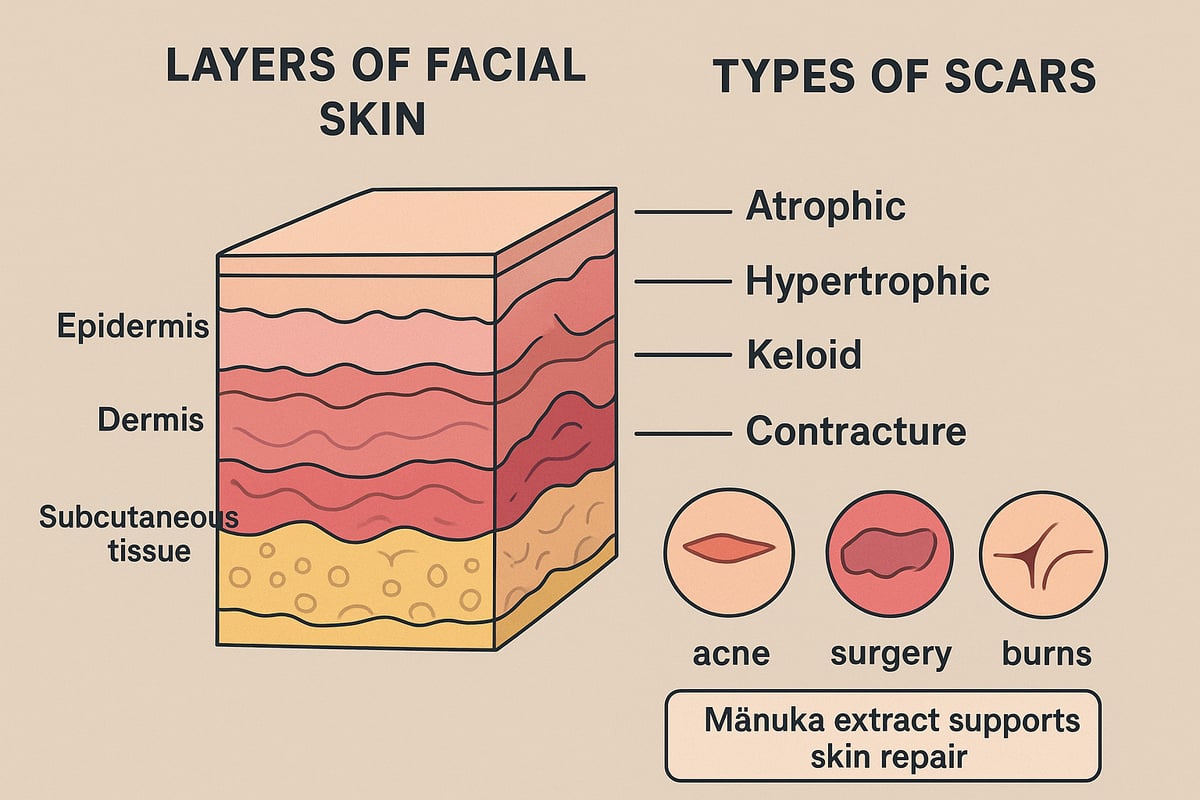
Types of Facial Scars
Facial scars come in several forms, each with unique characteristics. Here’s a quick comparison:
| Type | Appearance | Common Causes |
|---|---|---|
| Atrophic | Sunken, pitted | Acne, chickenpox |
| Hypertrophic | Raised, red, within wound border | Surgery, injury |
| Keloid | Raised, extends past wound | Piercings, burns |
| Contracture | Tight, restricts movement | Burns |
| Pigmentation | Dark/light spots, flat | Acne, trauma |
If you’re wondering “what type of scar in my face do I have,” these categories are a helpful place to start. Atrophic scars, for example, are common after acne, while keloids tend to affect those with certain genetic backgrounds.
How Facial Skin Differs
Facial skin is thinner and more delicate than skin elsewhere, making it more vulnerable to visible scarring. Unlike other parts of the body, the face is constantly exposed to sunlight, pollution, and daily movement. This unique environment can slow down healing and make a scar in my face more noticeable. The skin’s structure also means treatments need to be gentle yet effective, especially if you have sensitive skin or conditions like eczema.
The Emotional Impact
Living with a scar in my face can affect more than just appearance. Studies show that 55% of people with facial scars experience self-esteem issues, leading to anxiety or even social withdrawal. It’s natural to feel self-conscious, especially if the scar in my face draws unwanted attention. Remember, you’re not alone—millions of Australians and Kiwis share these concerns, and support is available.
What Determines Scar Severity?
Several factors influence how a scar in my face develops and how visible it becomes:
- Genetics: Some people are more prone to noticeable scars, especially keloids.
- Age: Younger skin heals faster but may scar more dramatically.
- Skin tone and type: Darker or lighter skin can develop pigmentation changes around scars.
- Wound care: Proper cleaning and protection can minimise scarring.
- Depth and size of injury: Deep wounds usually leave more prominent scars.
For more on how skin type affects scar formation and healing, see Scarring and Skin Types.
Acne Scarring: An Australian Perspective
Acne is a leading cause of facial scarring in Australia, affecting up to 30% of young adults. Many people first notice a scar in my face after a breakout that didn’t heal smoothly. Early and effective acne management can make a big difference in reducing long-term scarring, especially when paired with topical treatments like Mānuka extract that support natural skin repair.
Why Early Care Matters
The sooner you address a scar in my face, the better your chances of minimising its appearance. Early intervention with gentle cleansing, sun protection, and proven topicals can greatly improve outcomes. Taking action early can also help prevent emotional distress and support your overall wellbeing. If you’re unsure where to start, consulting a professional is always a wise first step.
Step-by-Step: Expert Medical Solutions for Facial Scars in 2025
Feeling overwhelmed by all the options for treating a scar in my face? You’re not alone. With new advancements in 2025, there’s a pathway to smoother, more confident skin, no matter the type or cause of your facial scarring.
Consult a Qualified Dermatologist
The first and most critical step for anyone with a scar in my face is seeking advice from a qualified dermatologist. Why start here? Professional assessment ensures your scar is diagnosed accurately, which is vital because treatment must be tailored to your unique skin type and scarring pattern.
Dermatologists now use advanced tools like 3D imaging and dermatoscopy to map your scar in detail. This technology captures depth, colour, and texture, giving a complete picture. These insights guide the creation of a customised treatment plan, increasing the likelihood of meaningful improvement for a scar in my face.
Personalised care also considers your overall health, genetics, and lifestyle. Early intervention often leads to better outcomes. Don’t underestimate the value of expert guidance for a scar in my face—it's your foundation for real progress.
Minimally Invasive Procedures
If you’re looking to address a scar in my face without major downtime, minimally invasive procedures have become increasingly sophisticated in 2025. Microneedling, for example, creates tiny channels in the skin to stimulate collagen production. Recent studies show up to 70% improvement in atrophic scars, especially when combined with supportive care like Mānuka extract.
Chemical peels use controlled solutions to exfoliate and renew the skin. There are several types, ranging from superficial to deep, with downtime varying from a day to a week. The best candidates for peels are those with pigmentation or shallow scars.
Laser therapy remains a gold standard for a scar in my face. Options like fractional CO2, erbium, and picosecond lasers target different scar depths and skin tones. Newer devices offer improved safety and faster recovery, making them accessible to more people. Minimally invasive options provide hope for visible change with less disruption to daily life.
Surgical and Advanced Options
For deep or stubborn scars, surgical and advanced treatments can make a dramatic difference. Subcision involves releasing tethered scars beneath the skin, while punch excision removes discrete scars entirely. Grafting may be used to fill in areas where tissue is missing, a common need for a scar in my face that has significant depth.
Scar revision surgery is an option when less invasive methods don’t deliver the desired results. This procedure reshapes or repositions scars for a subtler appearance. While risks like infection or pigment changes exist, careful planning and post-op care reduce complications.
Exciting new technologies are emerging in 2025, including stem cell therapy and platelet-rich plasma (PRP). These harness your body’s own healing power to regenerate skin. For many, these approaches offer hope when other treatments haven’t worked for a scar in my face.
Prescription Medications and Topicals
Not every scar in my face needs a procedure. Prescription topicals and gels play a major role, especially for fresh or less severe scarring. Silicone gels and sheets are clinically proven to flatten and fade scars over time. They create a breathable barrier that maintains hydration, optimising skin repair.
Topical retinoids, derived from vitamin A, accelerate cell turnover and help remodel scar tissue. Corticosteroids reduce inflammation and are effective for raised or keloid scars, but must be used under supervision to avoid thinning the skin.
In 2025, new prescription creams have hit the Australian market, offering targeted action for different scar types. For a detailed overview of topical therapies and their timing, check out this Evidence-Based Topical Therapy for Facial Scars resource. Always consult your dermatologist before starting any new regimen for a scar in my face.
Post-Treatment Care and Maintenance
After investing in medical solutions for a scar in my face, post-treatment care is crucial to maintain and maximise your results. Sun protection is non-negotiable, as UV exposure can increase scar pigmentation by up to 30%. Use a broad-spectrum SPF daily, even on cloudy days.
Hydration matters too. Gentle cleansing and regular moisturising support the healing process and prevent irritation. Avoid picking or scrubbing the area, as this can worsen a scar in my face.
Monitor your skin for any signs of infection, redness, or unexpected changes. Prompt follow-up with your healthcare provider ensures any issues are addressed early. Post-treatment routines are your long-term investment in smoother, more even skin.
Expected Results and Limitations
Patience is essential when managing a scar in my face. Visible improvement often takes between 3 and 12 months, depending on the scar’s age, depth, and your body’s healing response. Most people notice gradual changes in texture and colour, with the best outcomes seen when multiple approaches are combined.
It’s important to have realistic expectations. Some scars may never disappear completely, but their appearance can be softened. Factors like skin type, genetics, and adherence to aftercare all influence results for a scar in my face.
If progress stalls or complications arise, revisit your dermatologist. Remember, every scar tells a story, but with expert help, you’re empowered to write the next chapter in your skin’s journey.
Natural and At-Home Remedies: What Works and What Doesn’t
Do you ever look in the mirror and wish the scar in my face would just disappear overnight? If so, you’re certainly not alone. Many kiwis are searching for gentle, effective ways to improve facial scars at home. Let’s explore what science and nature really say about natural remedies, so you can make confident choices for your own skin.
The Science Behind Natural Scar Remedies
Natural solutions for a scar in my face are often surrounded by myths and high hopes. But what does the evidence actually say? The skin’s healing process involves inflammation, collagen rebuilding, and remodelling. Some natural ingredients can help by calming inflammation and supporting new tissue growth.
However, not every “miracle” you see online is backed by science. Studies show that while certain botanicals have real benefits, others may do little or even cause irritation. It’s important to separate fact from fiction when searching for a gentle way to manage a scar in my face.
Proven Natural Ingredients
When it comes to proven natural options, a few ingredients stand out for helping a scar in my face heal more smoothly. Let’s look at what works:
| Ingredient | Benefits | Evidence Level |
|---|---|---|
| Mānuka extract | Antimicrobial, calms redness, supports healing | High (clinical & user) |
| Aloe vera | Soothes, may reduce scar tissue | Moderate (mixed studies) |
| Vitamin E | Antioxidant, mixed results on scars | Low to Moderate |
| Vitamin C | Boosts collagen, brightens skin tone | Moderate |
Mānuka extract, in particular, is gaining recognition for its unique role in supporting the skin’s repair process, especially if you’re dealing with a scar in my face that’s stubborn or slow to fade.
The Power of Full Spectrum Mānuka Extract
What sets full spectrum Mānuka extract apart? Unlike standard oils, it retains all the plant’s active compounds, offering a more complete approach to healing a scar in my face. Recent research highlights its antimicrobial and anti-inflammatory strengths, which can speed up skin regeneration and reduce redness.

Customers share powerful before-and-after stories, crediting Waipu Extracts for visible improvements in their scar in my face—often noticing smoother texture and less noticeable marks. To use, apply a small amount to clean, dry skin once or twice daily. Always patch test first, especially if your skin is sensitive.
Compared to synthetic products, full spectrum Mānuka extract is less likely to cause irritation and offers a richer, more holistic benefit for facial scars.
Home Techniques: Safe Practices
If you’re keen to improve a scar in my face at home, stick to safe, dermatologist-approved practices:
- Gently massage the area to boost circulation and collagen
- Use silicone sheets or gels to keep scars flat and hydrated
- Maintain good skin hydration with moisturisers
- Always patch test new products to avoid reactions
Never treat open wounds or active infections at home. If the scar in my face is new or changing rapidly, consult a professional before starting any routine.
Ineffective or Risky At-Home Treatments
Some popular internet tips for a scar in my face can actually make things worse. Avoid these risky myths:
- Lemon juice or toothpaste (can burn or irritate)
- Abrasive scrubs or harsh exfoliants
- Unregulated creams with unknown ingredients
If you notice worsening redness, pain, or infection, stop home care immediately and seek medical advice. Listen to your skin—sometimes, less is more when it comes to caring for a scar in my face.
Prevention and Minimising Future Facial Scarring
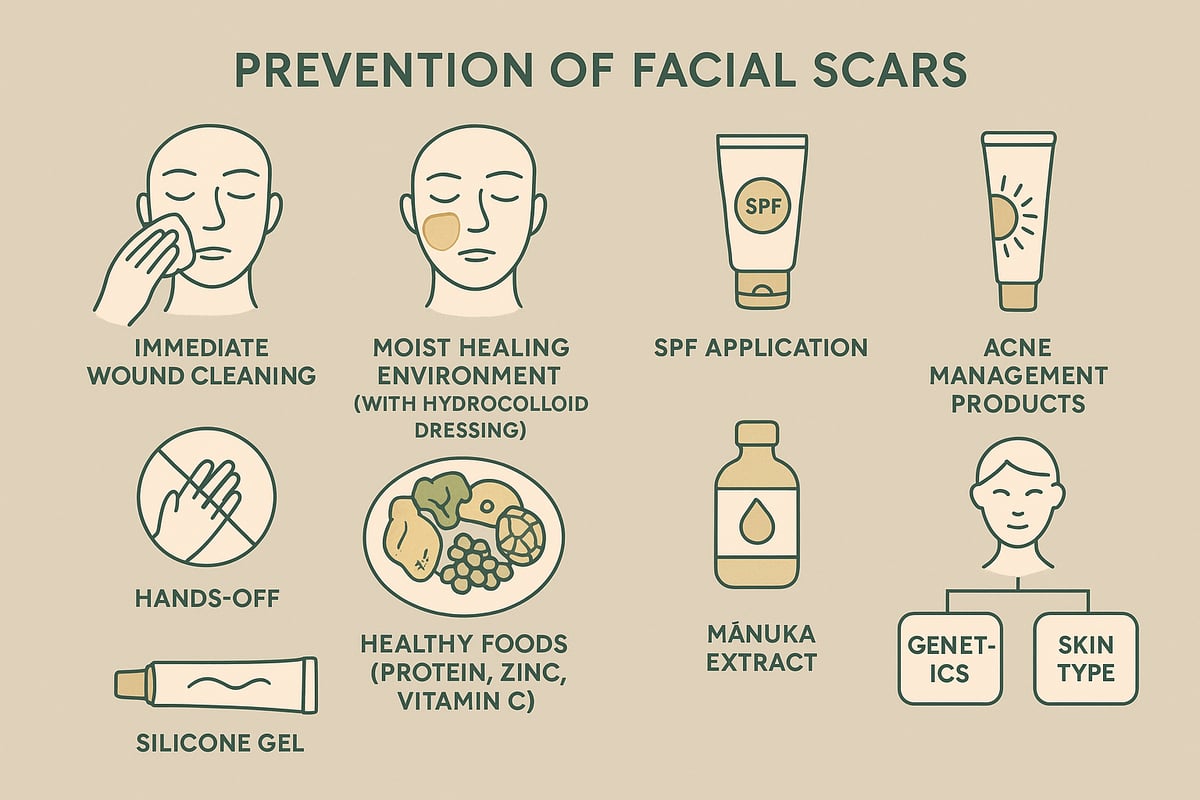
Preventing a scar in my face is always easier than treating one later. Whether you are dealing with an injury, acne, or surgery, the right steps from the start can make a world of difference. Let’s break down the most effective ways to protect your skin and minimise lasting marks.
Immediate Wound Care: Your First Line of Defence
Act fast after any injury to your face. Clean the area gently with mild soap and cool water. Keeping the wound moist with a sterile dressing can cut the risk of a scar in my face by up to 50 percent, according to recent studies. Avoid letting the wound dry out, as this can slow healing and increase scar formation.
- Clean gently, avoid scrubbing
- Use sterile, non-stick dressings
- Keep the wound moist, not wet
If you notice signs of infection, such as redness or pus, see your GP promptly.
Sun Protection: Shielding Vulnerable Skin
Sun exposure is a top reason scars darken and linger. Apply a broad-spectrum SPF 30 or higher daily, even on cloudy days. UV light can increase pigmentation in scars by up to 30 percent, making them more noticeable and stubborn.
- Cover healing areas with hats or clothing outdoors
- Reapply sunscreen every two hours
- Choose mineral SPF for sensitive skin
Protecting a scar in my face from the sun is crucial for a smoother, more even result.
Hands Off: Why Interference Makes Scars Worse
Picking, scratching, or squeezing healing skin can deepen scars and slow progress. It is tempting, especially with scabs or acne, but hands-off is best.
- Avoid picking scabs or spots
- Use gentle, non-irritating cleansers
- Keep nails short to reduce accidental scratching
Let your skin do its job so the scar in my face has the best chance to fade.
Nutrition: Fuel for Skin Repair
What you eat has a direct effect on how well your skin heals. Prioritise foods rich in protein, zinc, and vitamin C. These nutrients support collagen production and tissue repair.
| Nutrient | Role in Healing | Food Sources |
|---|---|---|
| Protein | Builds new tissue | Lean meats, tofu, eggs |
| Zinc | Reduces inflammation | Seafood, seeds, nuts |
| Vitamin C | Boosts collagen | Citrus, berries, capsicum |
A balanced diet helps your body repair a scar in my face from the inside out.
Managing Acne and Chronic Conditions
Ongoing breakouts or skin conditions can lead to repeated damage and new scars. Treat acne early with proven products or see a dermatologist for personalised advice.
- Stick to a gentle skincare routine
- Avoid harsh scrubs or drying treatments
- Seek help for eczema, psoriasis, or infections
Stopping flare-ups reduces the risk of another scar in my face forming.
Early Intervention: Proven Topicals for Scar Prevention
Start using effective topicals as soon as the skin closes. Silicone gels and sheets are gold-standard for flattening and fading new scars. Mānuka extract, with powerful antimicrobial and skin-regenerating properties, is another standout. For those wanting to understand the science, learn more about Why Mānuka extract works and why it’s trusted for facial scar care.
- Apply silicone or Mānuka extract twice daily
- Patch test first, especially if you have sensitive skin
- Continue for several weeks or as advised
Early action can help keep a scar in my face discreet and smooth.
Genetics and Skin Type: Personalising Your Prevention Plan
Everyone’s skin is different. Genetics, age, and skin tone play a big role in how scars form and heal. People with darker skin may notice more pigmentation, while those with fair skin might see redness for longer.
- Talk to a professional about your unique risks
- Adjust your prevention routine as needed
Understanding your skin’s needs is key to preventing a scar in my face from becoming a permanent concern.
Lifestyle, Mental Health, and Support for Living with Facial Scars
Living with a scar in my face can feel like carrying a silent story everywhere you go. For many, the emotional weight of facial scars is as real as the physical mark itself. If you’ve ever felt anxious about your appearance, you’re certainly not alone.
Many people with a scar in my face experience more than just visible changes. Studies show that facial scars can trigger anxiety, depression, or even social withdrawal. Recognising your feelings is the first step toward healing inside and out.
Support networks can make a world of difference. Online communities, peer groups, and therapy offer safe spaces to share experiences and find understanding. Real-life stories, like those highlighted in acne case studies and scars, remind us that recovery and confidence are possible for anyone dealing with a scar in my face.
Building self-confidence starts with small, daily habits. Try positive self-talk, set gentle goals, and celebrate progress, no matter how minor. Practising mindfulness or relaxation exercises can help you manage emotional ups and downs linked to a scar in my face.
Makeup and camouflage products can empower you to face the world on your terms. Dermatologist-approved concealers, colour correctors, and mineral powders are safe options. For those interested in natural skincare, choosing products like Mānuka extract or learning about oil for face scars and skin can support gentle, effective routines.
Sometimes, professional support is essential. If you notice persistent sadness, anxiety, or trouble coping with a scar in my face, consider reaching out to a mental health professional. Everyone’s journey is unique, and seeking help is a sign of strength, not weakness. Stories of resilience show that many people thrive and find new confidence despite visible scars.
Holistic care means looking after both your appearance and wellbeing. Combining emotional support, positive lifestyle choices, and safe, science-backed skincare (like Mānuka extract) creates a powerful foundation for living well with a scar in my face. Remember, your story is valid, and support is always within reach.
Frequently Asked Questions About Facial Scars in 2025
Wondering what to expect with a scar in my face? You’re not alone. Here are the most common questions, answered with clarity and compassion.
Can all facial scars be removed completely?
Most facial scars can be improved, but complete removal is rarely possible. Treatments can help fade a scar in my face, making it less noticeable, but some texture or colour differences may remain. Early intervention and the right approach offer the best outcomes.
How long does it take for a scar to fade?
Scar healing is gradual. For a typical scar in my face, visible fading can take 3 to 12 months, depending on your skin type, age, and the treatment used. Deep or older scars often require more time and multiple therapies.
Are natural remedies as effective as medical treatments?
Natural options like Mānuka extract and aloe vera can support healing and reduce redness, especially for newer scars. However, medical treatments such as lasers or microneedling usually deliver more dramatic improvements for a scar in my face. Combining both approaches, under expert guidance, often works best.
Is Mānuka extract safe for children and sensitive skin?
Yes, high-quality Mānuka extract is gentle and suitable for most skin types, including sensitive or young skin. Always patch test before using on a scar in my face, and choose products with minimal additives. For deep or stubborn scars, consult a dermatologist for tailored advice.
How do I tell if my scar needs professional attention?
Seek expert help if your scar in my face is painful, growing, darkening, or affecting your confidence. Scars that thicken, itch, or change rapidly may need assessment. A dermatologist can diagnose the scar type and recommend the best options, including the latest Advancements in Acne Scar Treatment.
Can lifestyle changes alone improve scar appearance?
Healthy habits like sun protection, a balanced diet, and gentle wound care can boost skin repair and reduce scar visibility. While lifestyle changes help, they may not fully resolve a scar in my face without additional treatments or topicals like Mānuka extract.
What new treatments are on the horizon for 2025?
Exciting new therapies include stem cell injections, advanced lasers, and combination approaches tailored to individual scars. For the latest breakthroughs in prevention and management, see Innovations in Scar Prevention and Management. Staying informed helps you make the best choices for a scar in my face.
After learning about the latest science and proven natural solutions for facial scars, it’s clear you have real options—especially with the unique power of full spectrum Mānuka extract. We’ve seen how this botanical powerhouse, crafted with care by Waipu Extracts, can gently support your skin’s healing journey and help you feel more confident in your own skin. If you’re ready to take the next step, why not explore how natural Mānuka can make a difference for you?
Get your Mānuka extract today
Your skin deserves the best nature and science can offer.